
This project is protected. Please enter a password.


AWS: Enterprise Model-training


Automated Machine-learning (AutoML)

Making machine-learning model-training accessible for non-expert Enterprise customers.

Role:Lead Product Designer

Scope:Research, Design, Prototyping

Time:6 months

Team:2 PMs, 2 Designers, Director of AWS Design, ML scientists, Engineers

Ownership:

Lead UX audit of V0 wireframes.

Facilitated working sessions with ML scientists to clarify workflows and constraints.

Prototyped V1 key flows for live demo.

Lead usability test planning and execution.

Drove design system reviews and compliance.

Supported launch readiness and documentation.

Impact:

Successfully delivered live demo for Re:Invent, then beta launch
Strategic problem

AWS had an ambitious idea: create a tool that allows non-technical business users to train a computer vision model. This offering would give Enterprise customers the capability to build AI models according to their own business needs through an interface that simplified complex ML concepts.

Project goals

In just six weeks, the team had to transform a deeply technical prototype into something demo-ready for Re:Invent, AWS' annual conference. In the weeks following, we validated our solutions with potential cusotmer and launched the beta. Today, it is known as AWS AutoML / Amazon Sagemaker Autopilot.

Product opportunity


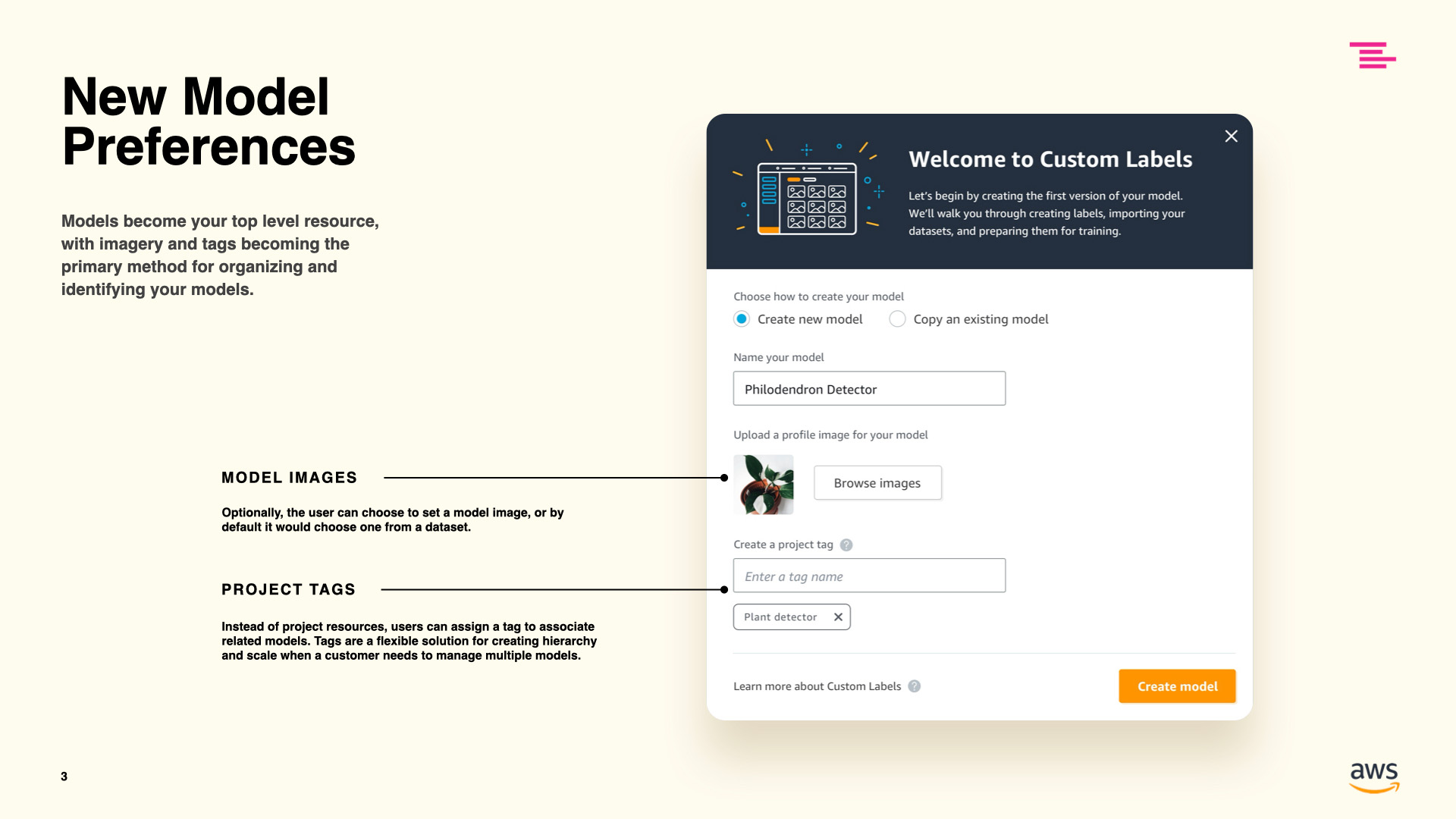
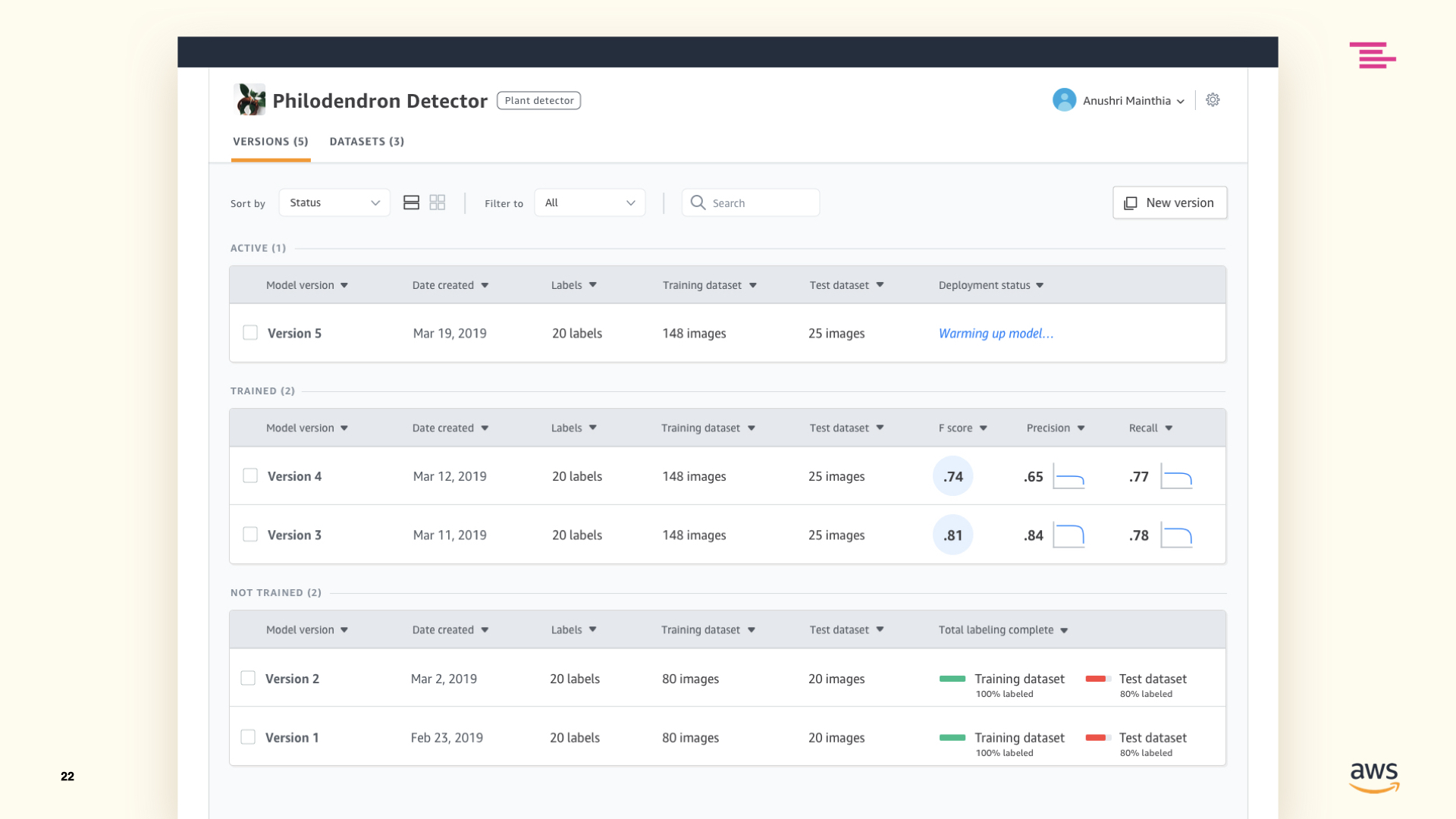
Custom Labels: an AWS product that puts training AI models in the hands of businesses.

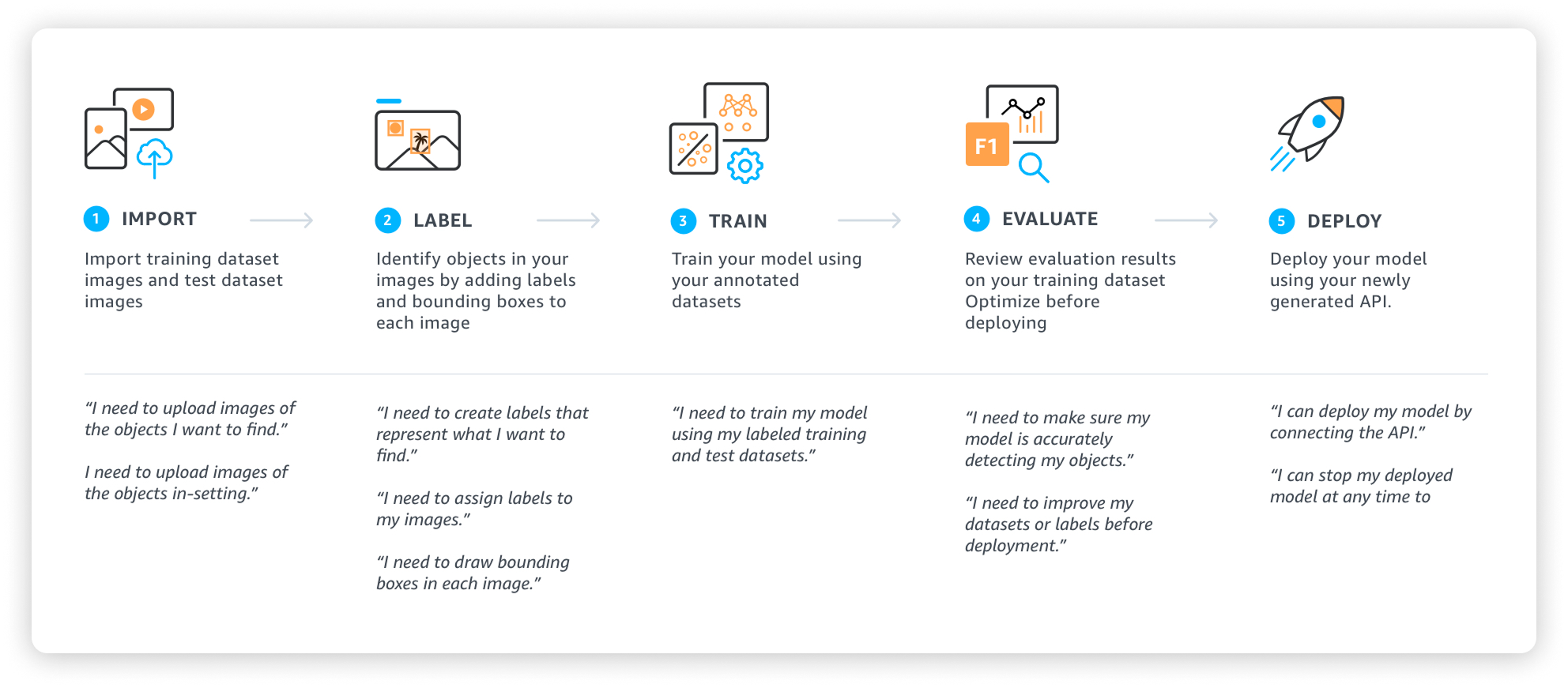
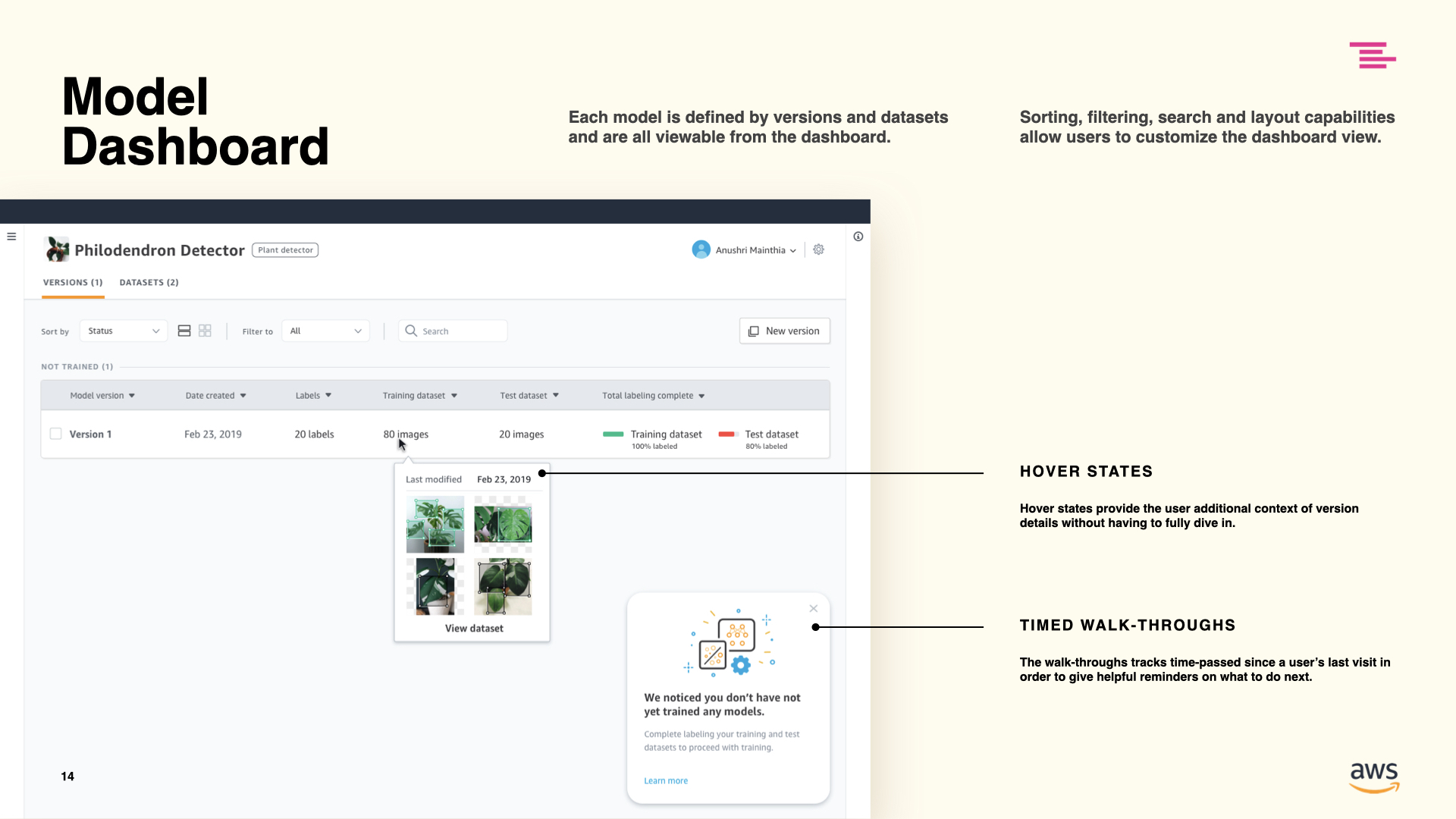
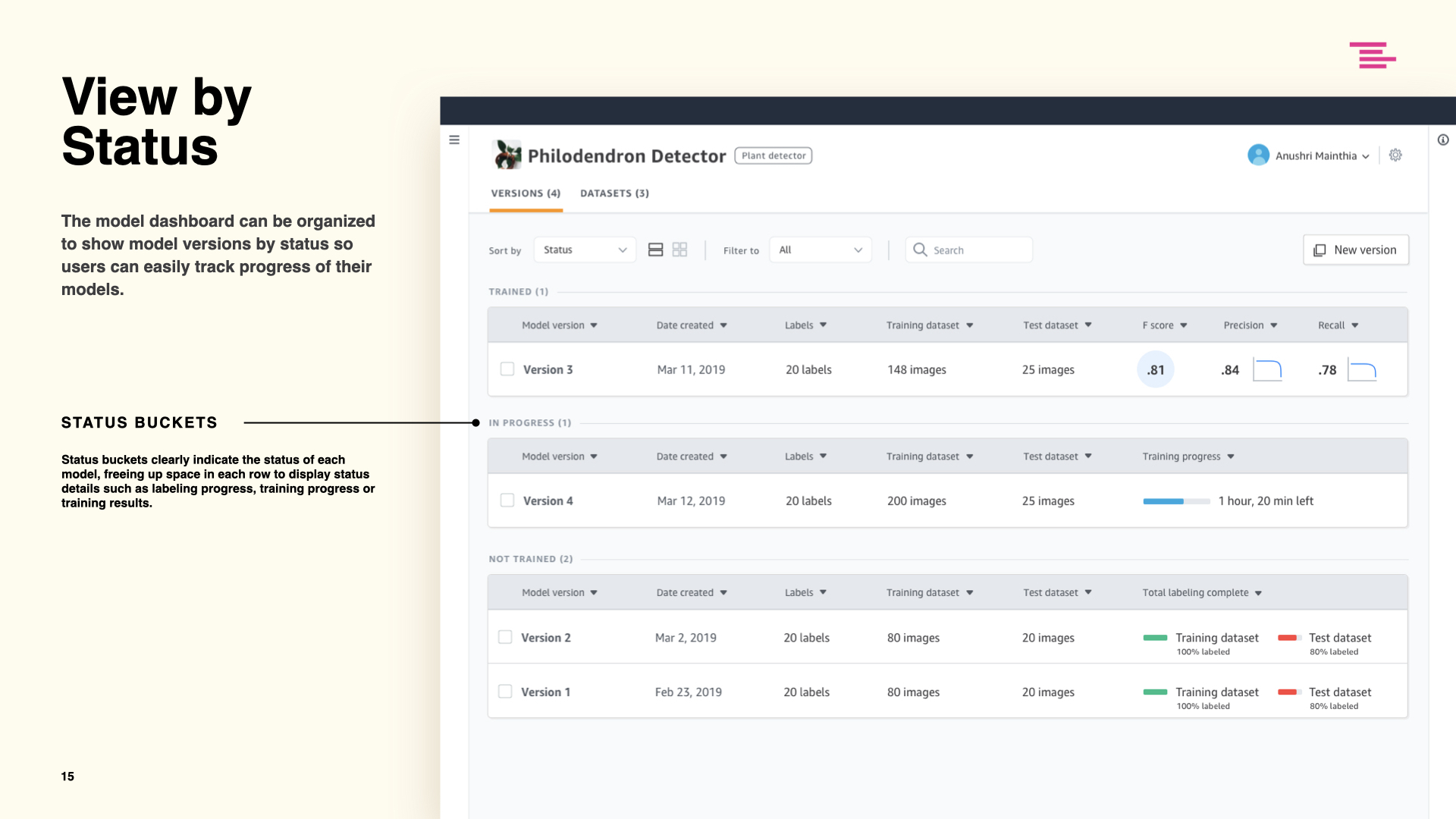
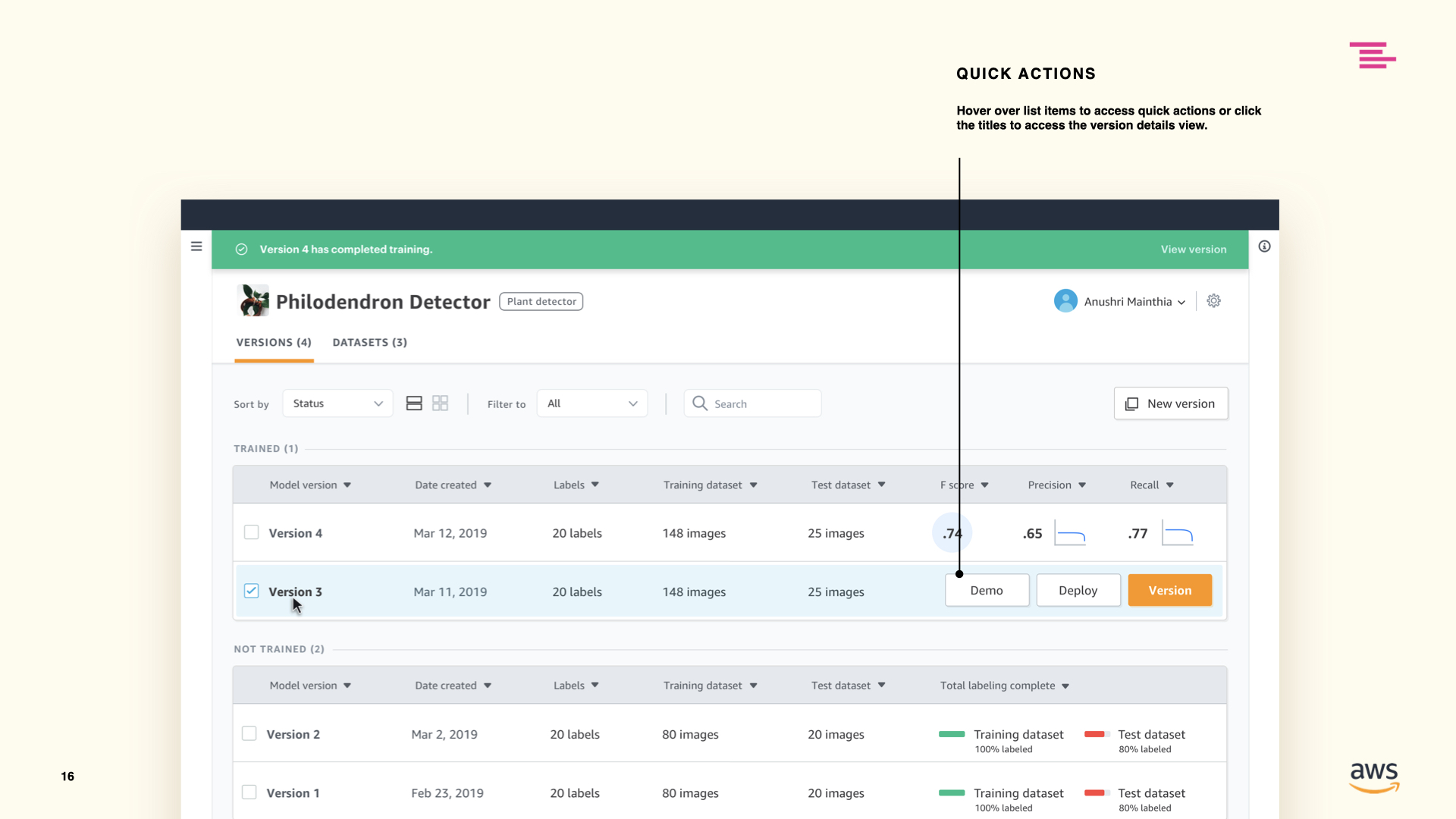
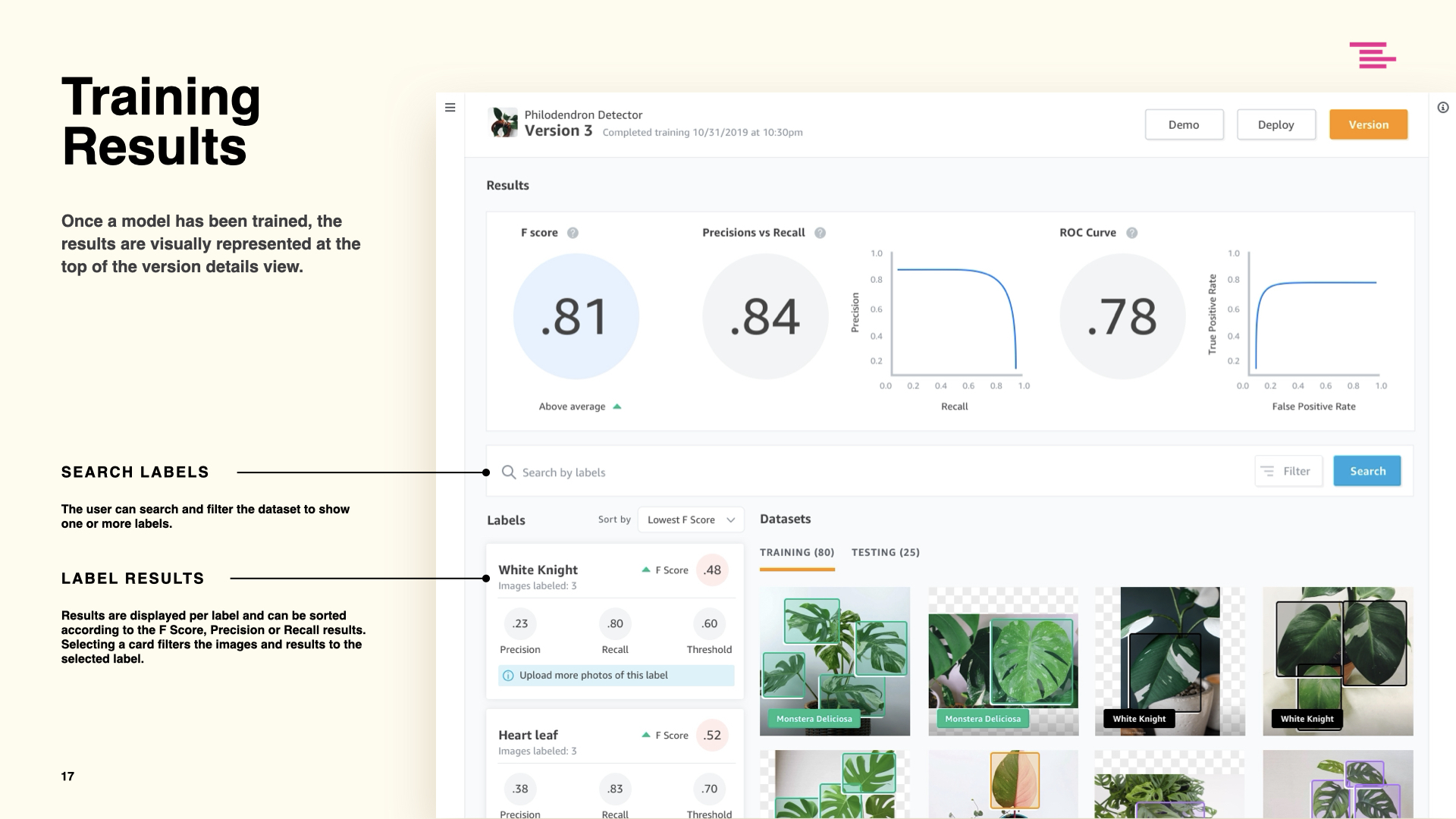
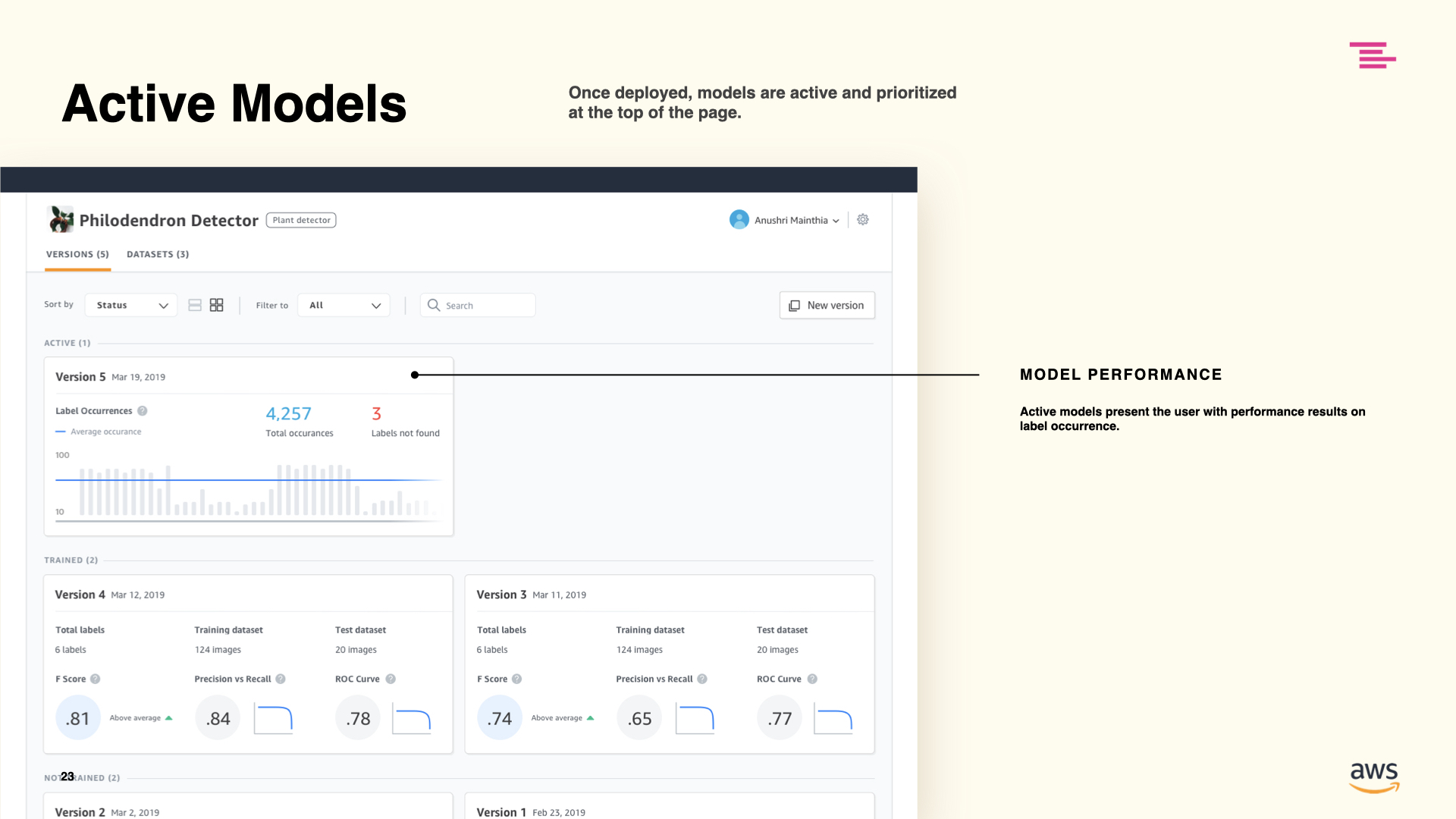
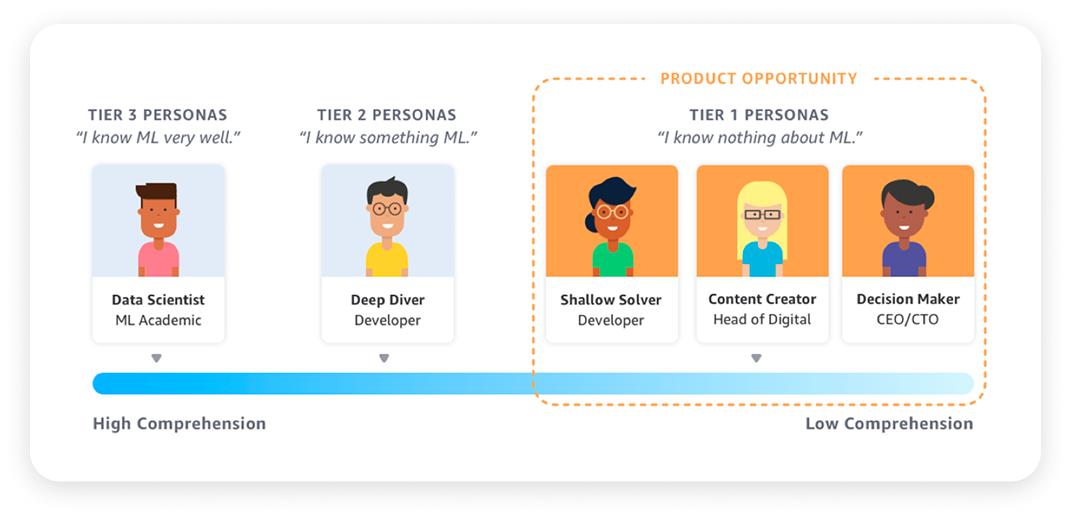
Custom Labels was built to make machine learning accessible to users with little to no background in data science. The product simplified the complex process of labeling images and training models through an intuitive interface, allowing non-technical users to get started quickly and confidently.

While business users were the primary audience, the tool also supported a secondary group of technical users (data scientists and engineers) who needed to review results and deploy models to production. This dual focus required a careful balance: offering a streamlined, beginner-friendly workflow to execute on highly intensive computing processes.

The overarching goal was to democratize machine-learning by empowering users of all skill levels to build, refine, and deploy AI models with confidence and ease.

User experience objectives


Balancing user simplicty and technical ML requirements

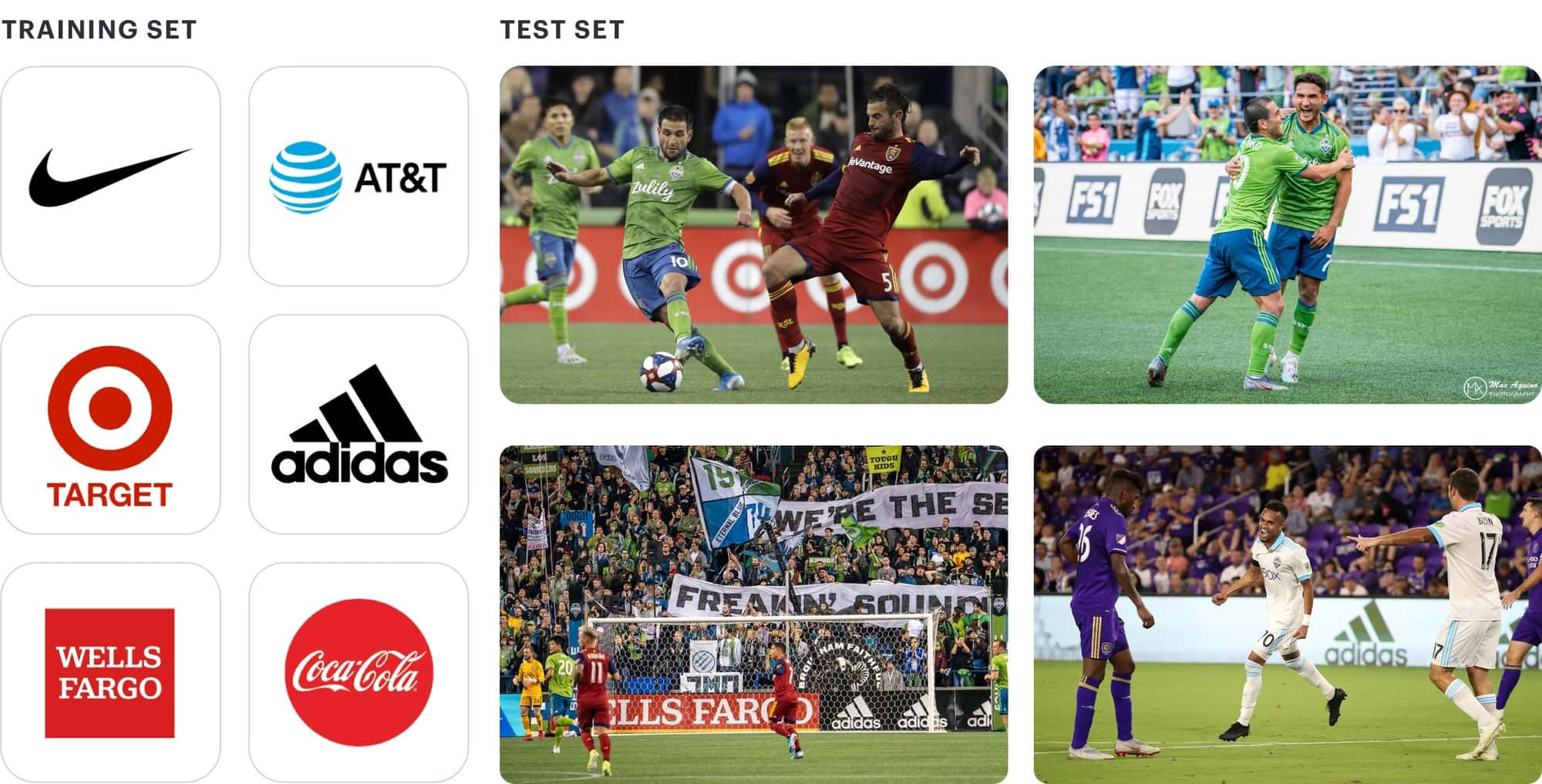
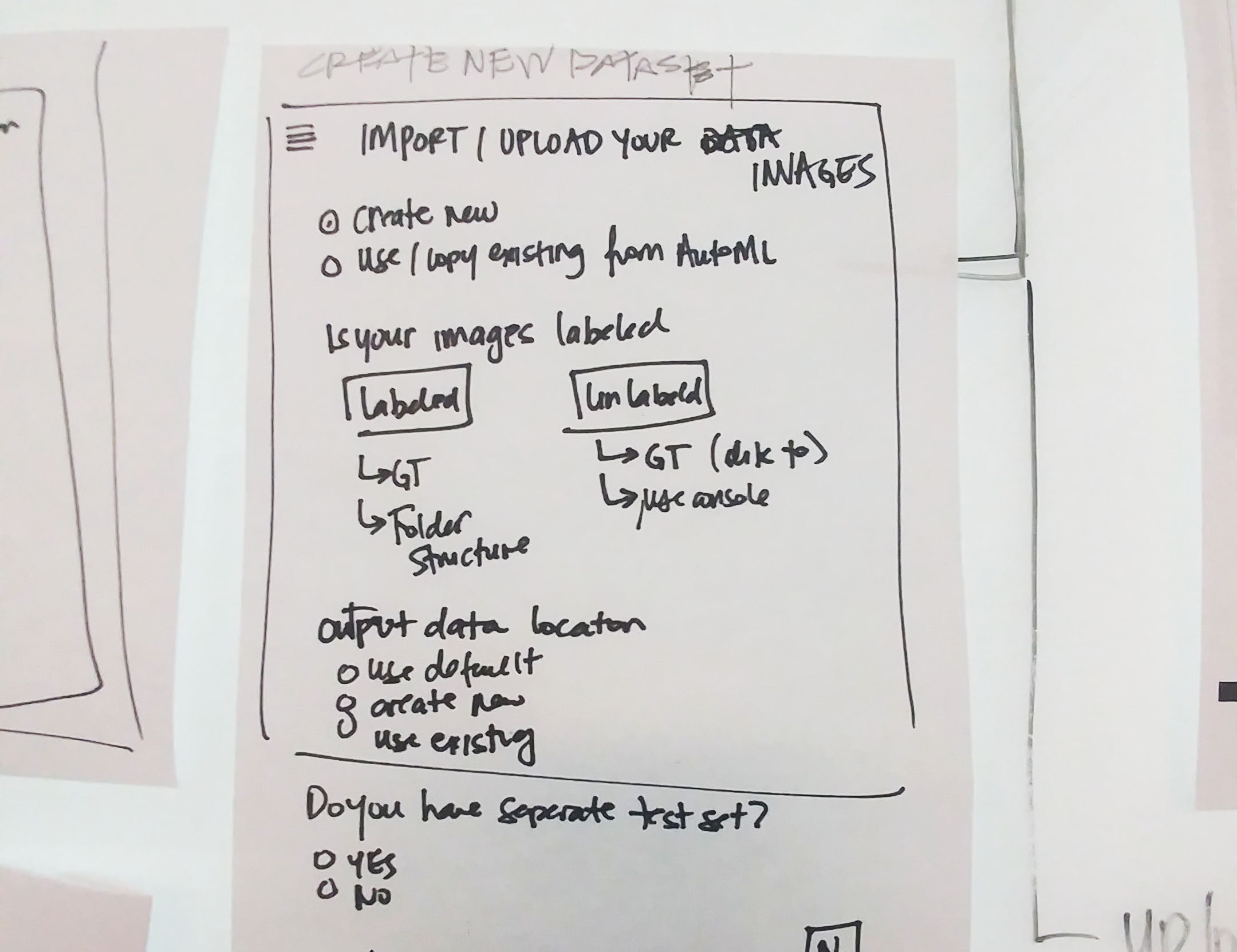
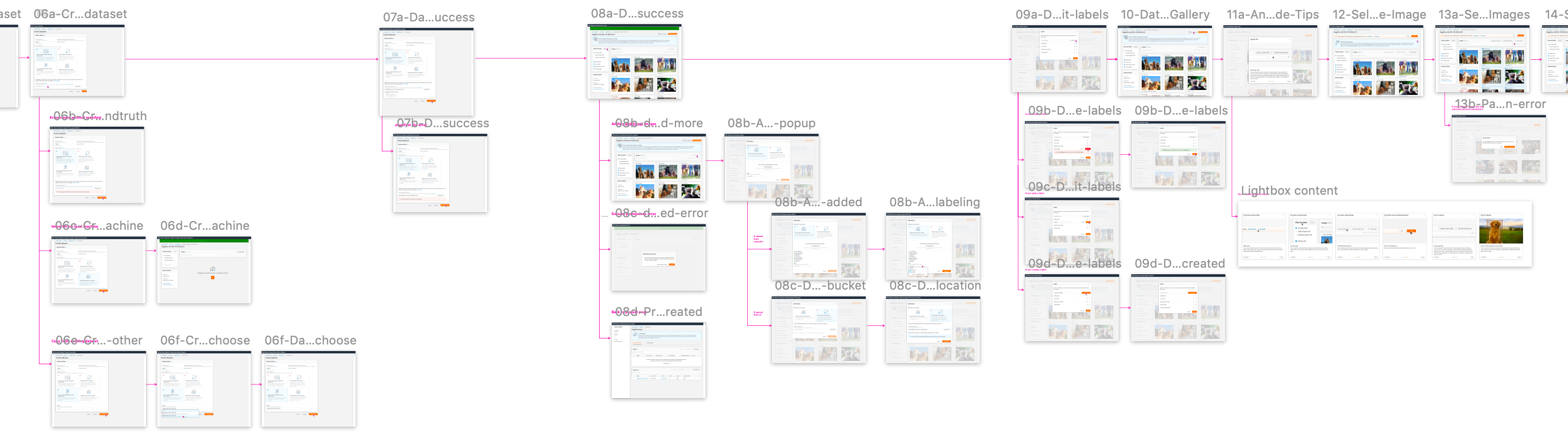
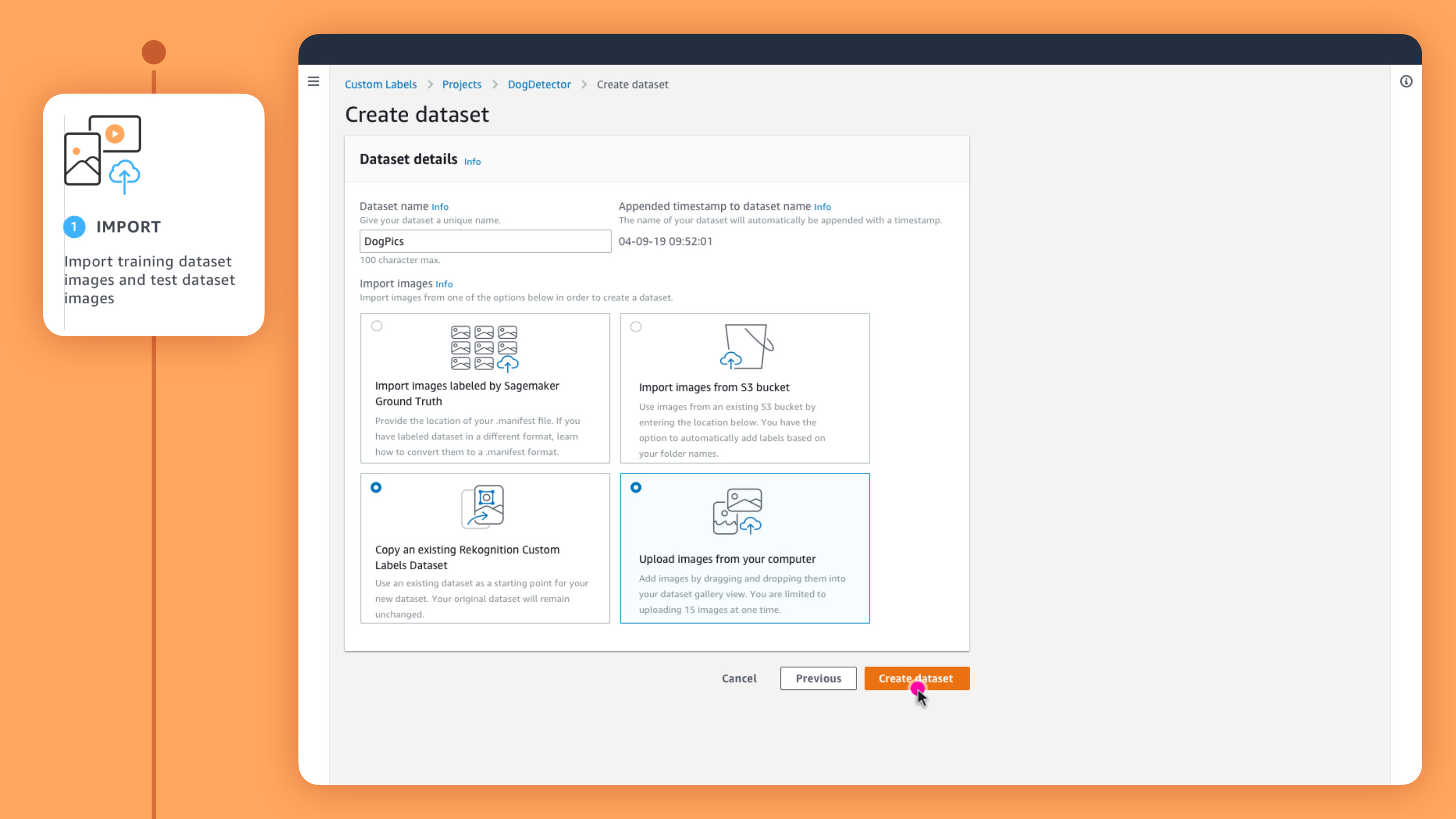
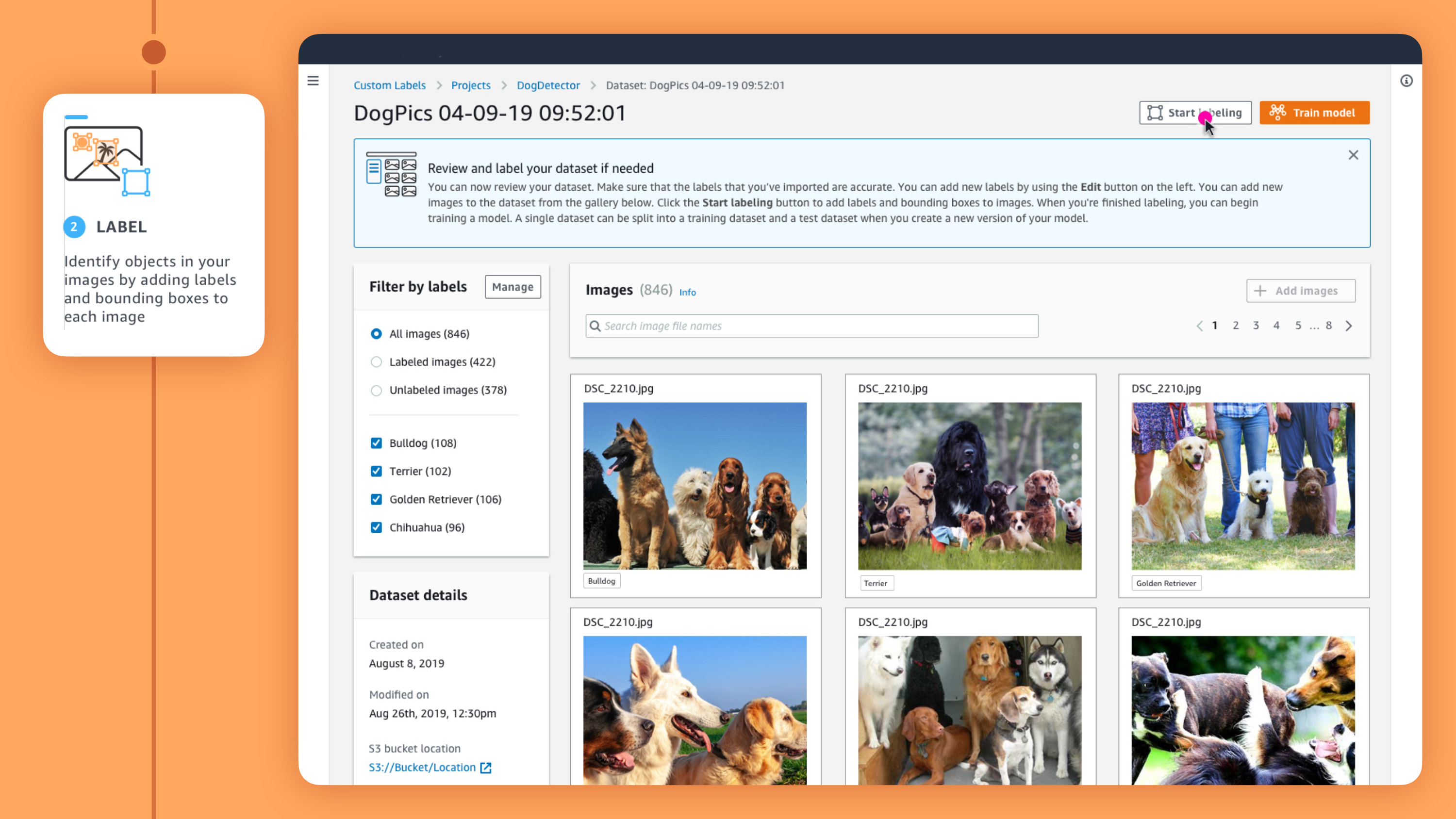
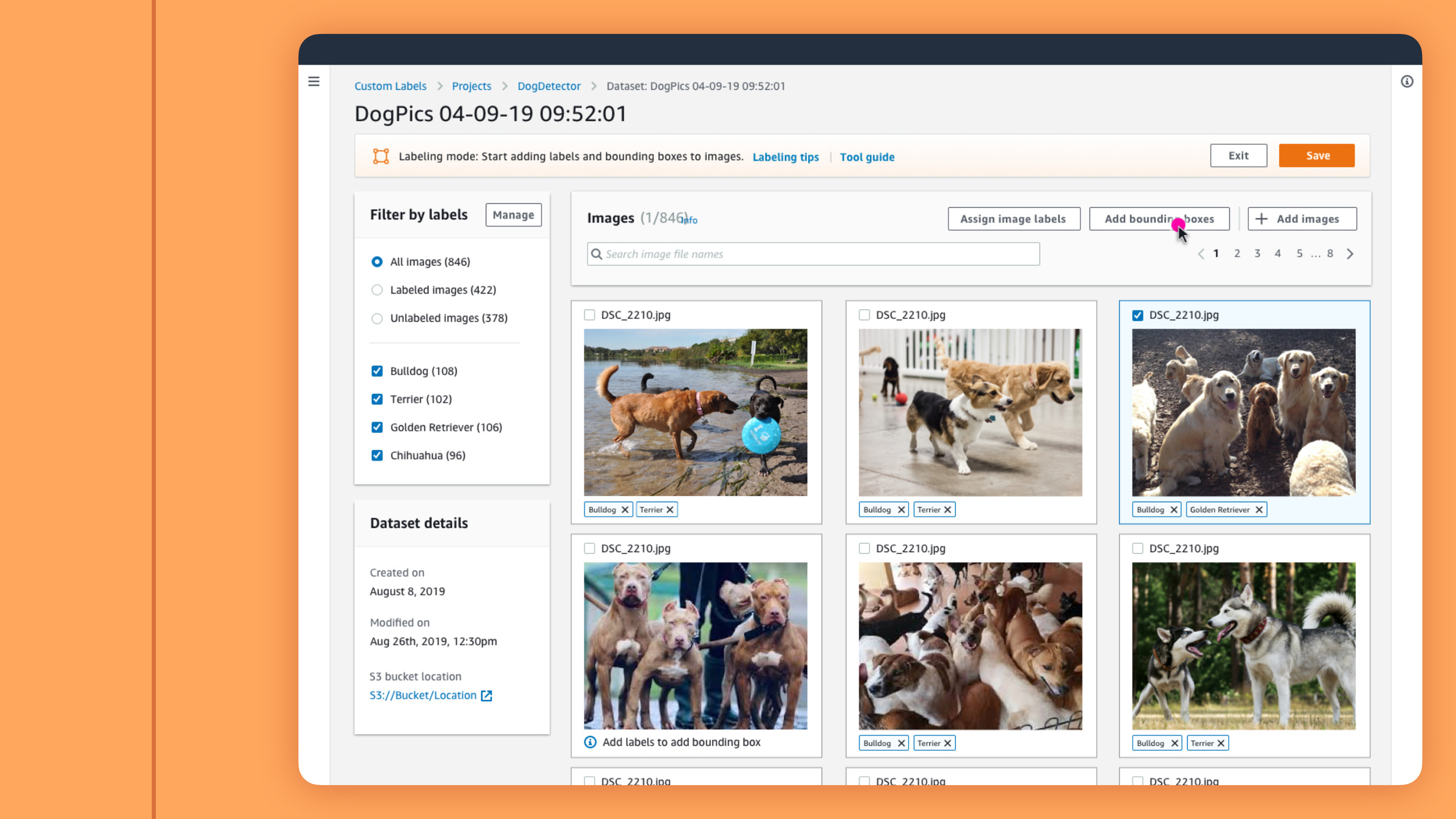
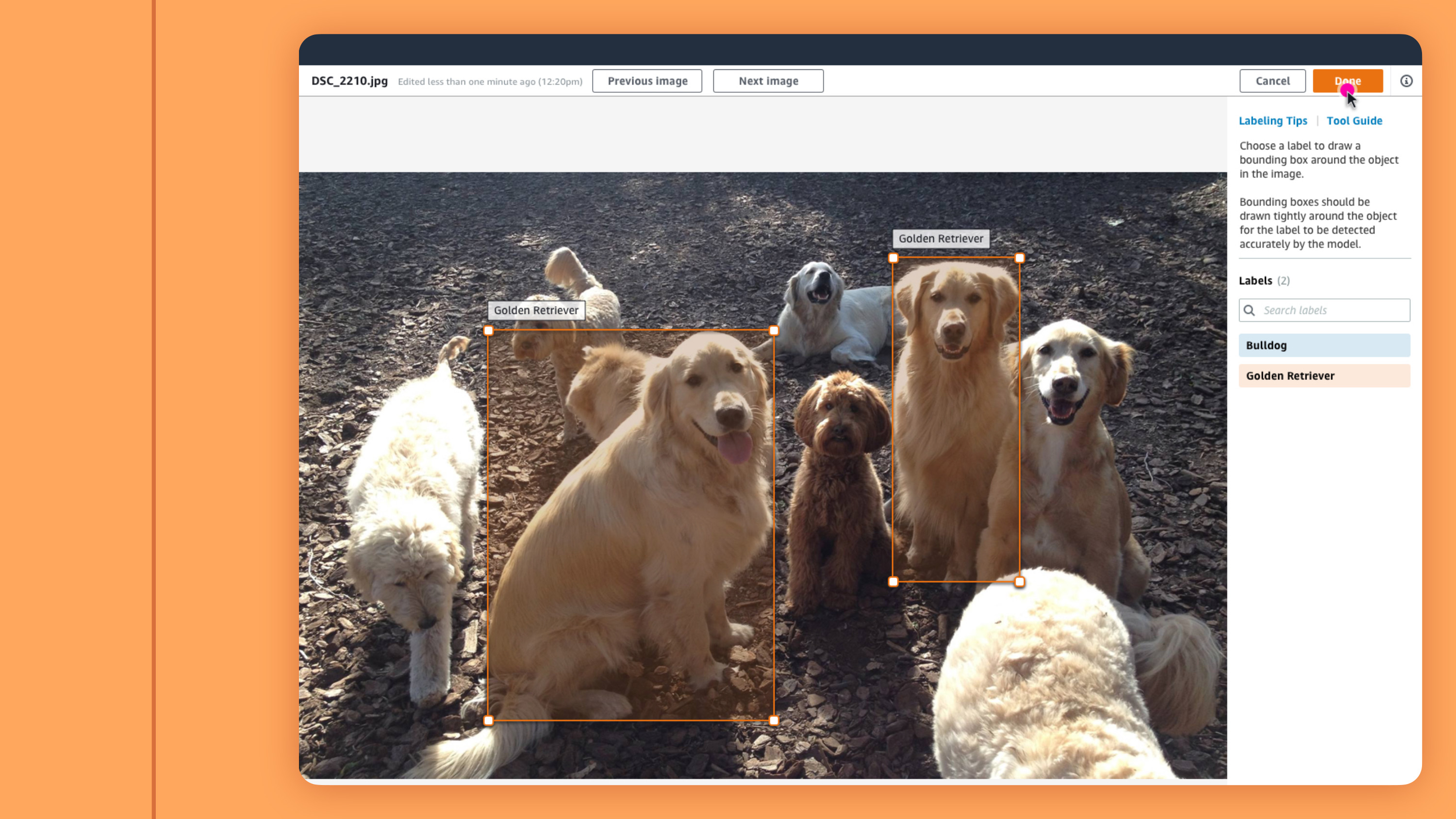
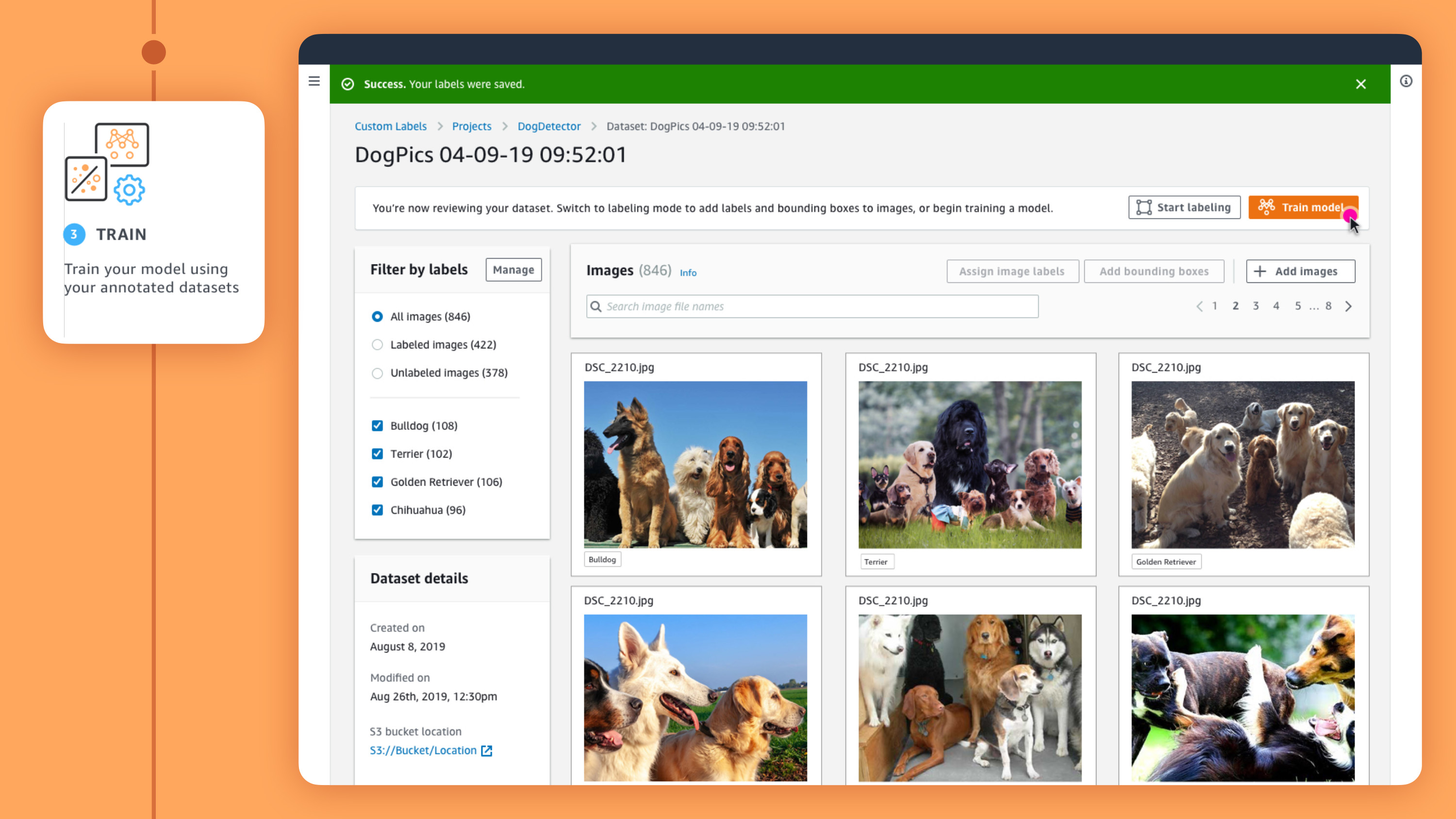
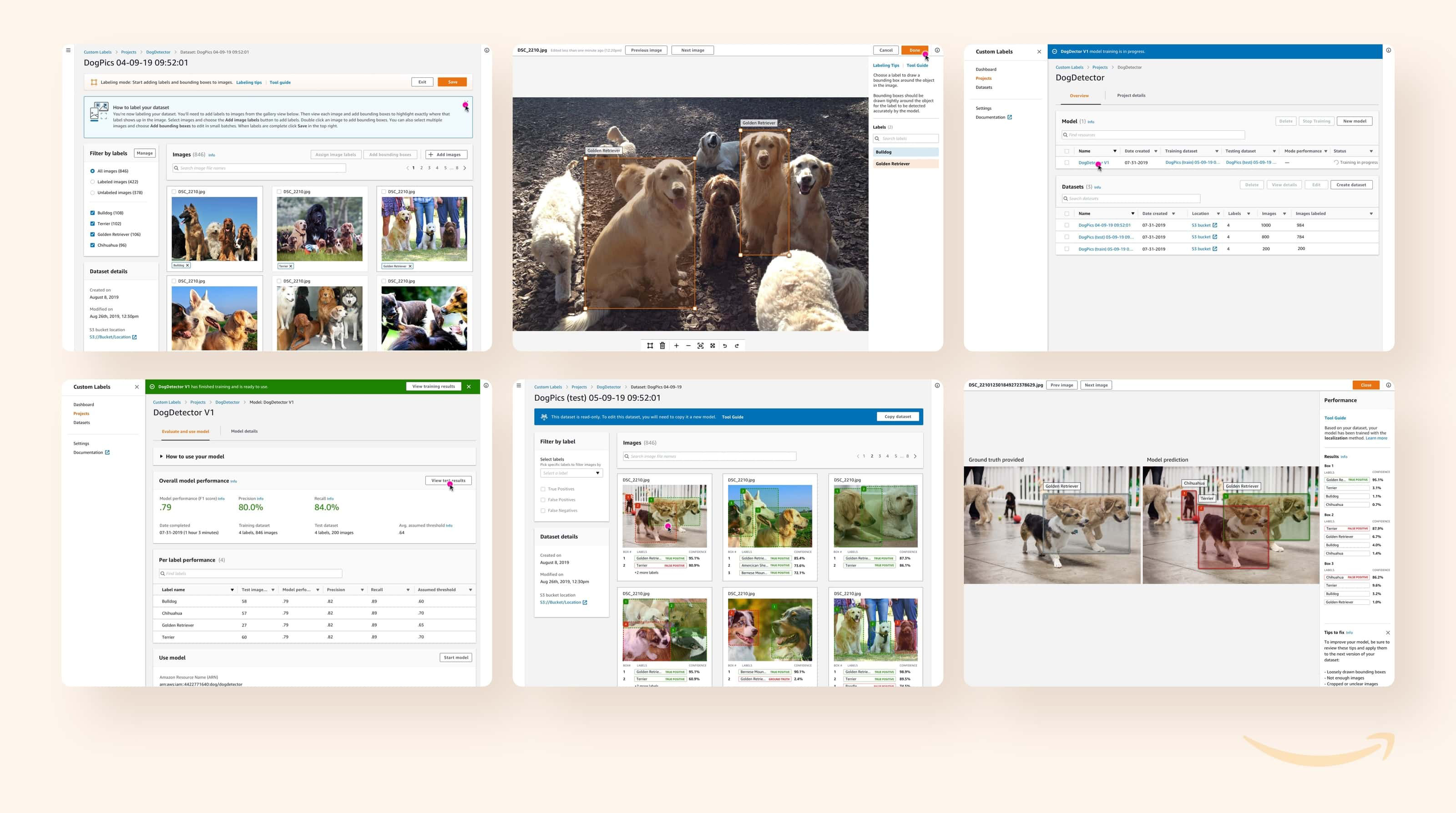
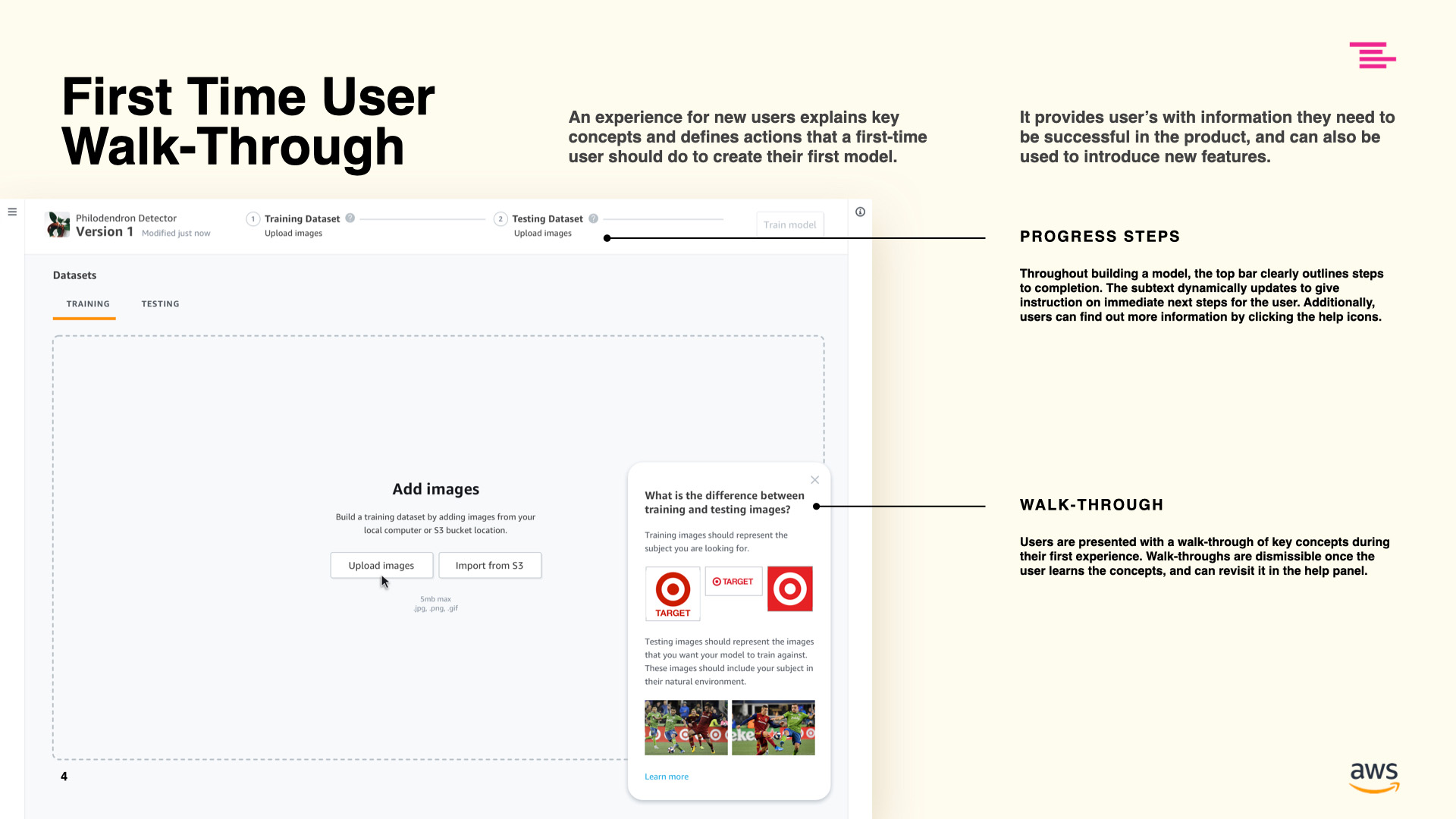
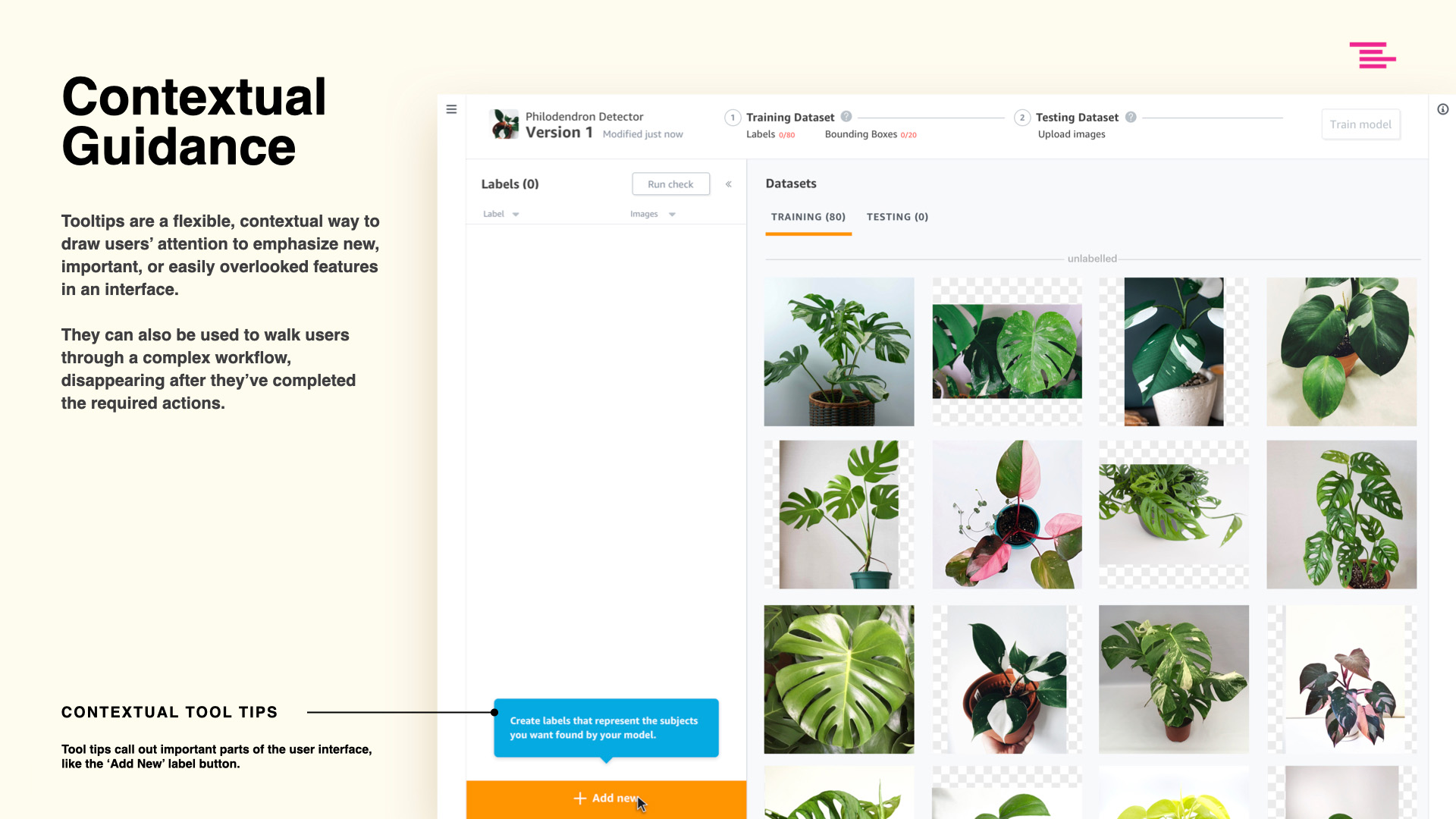
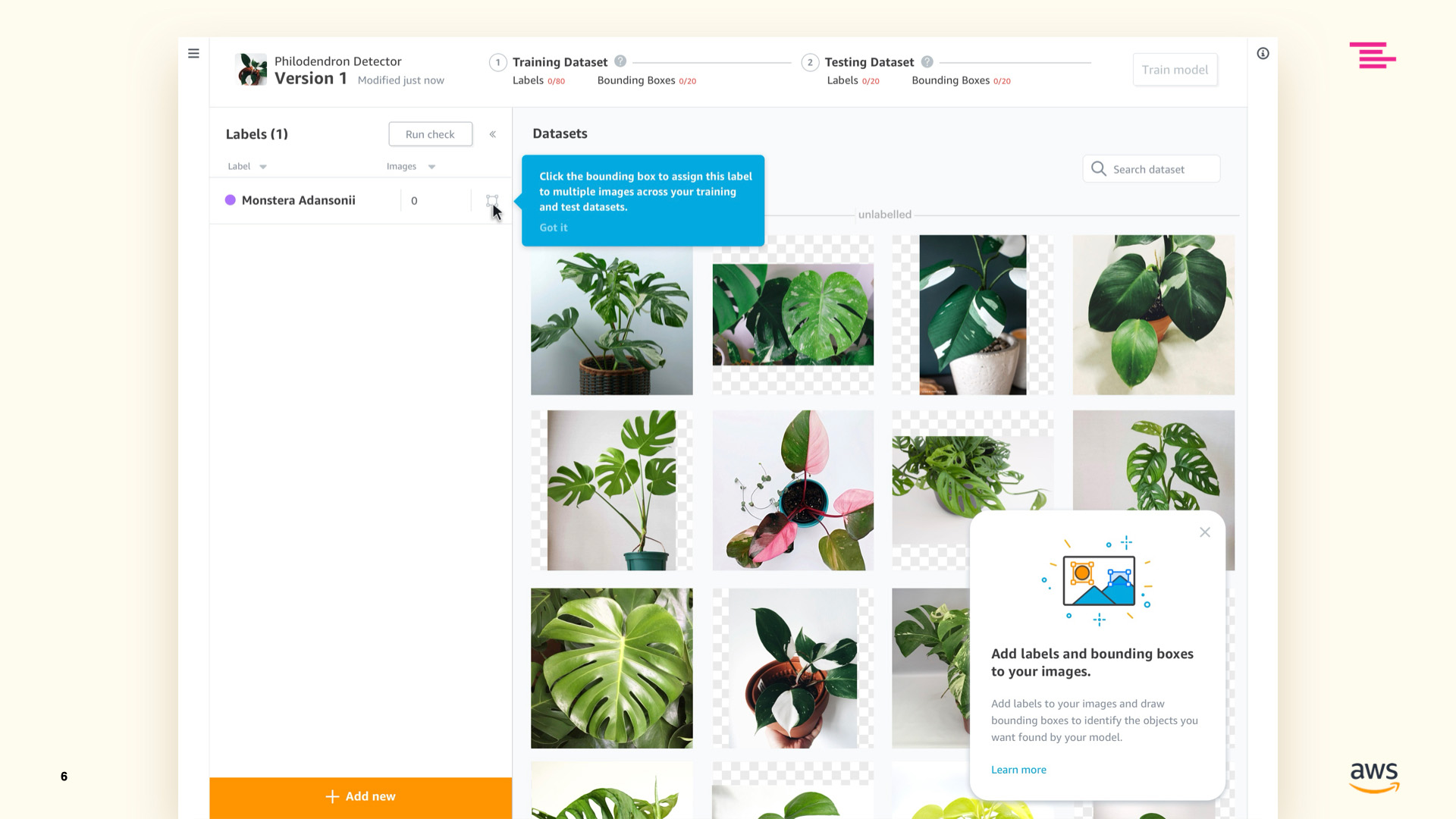
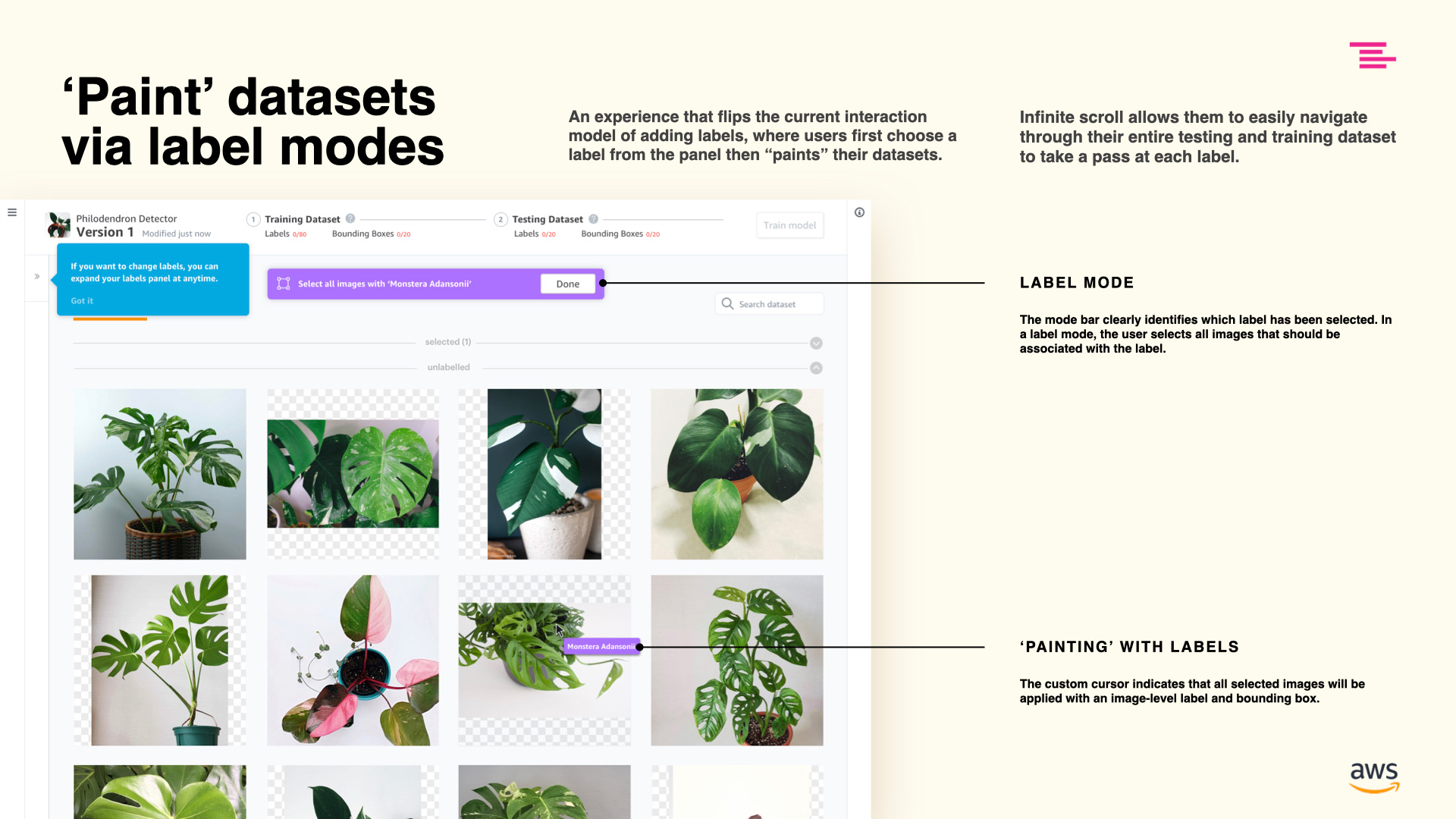
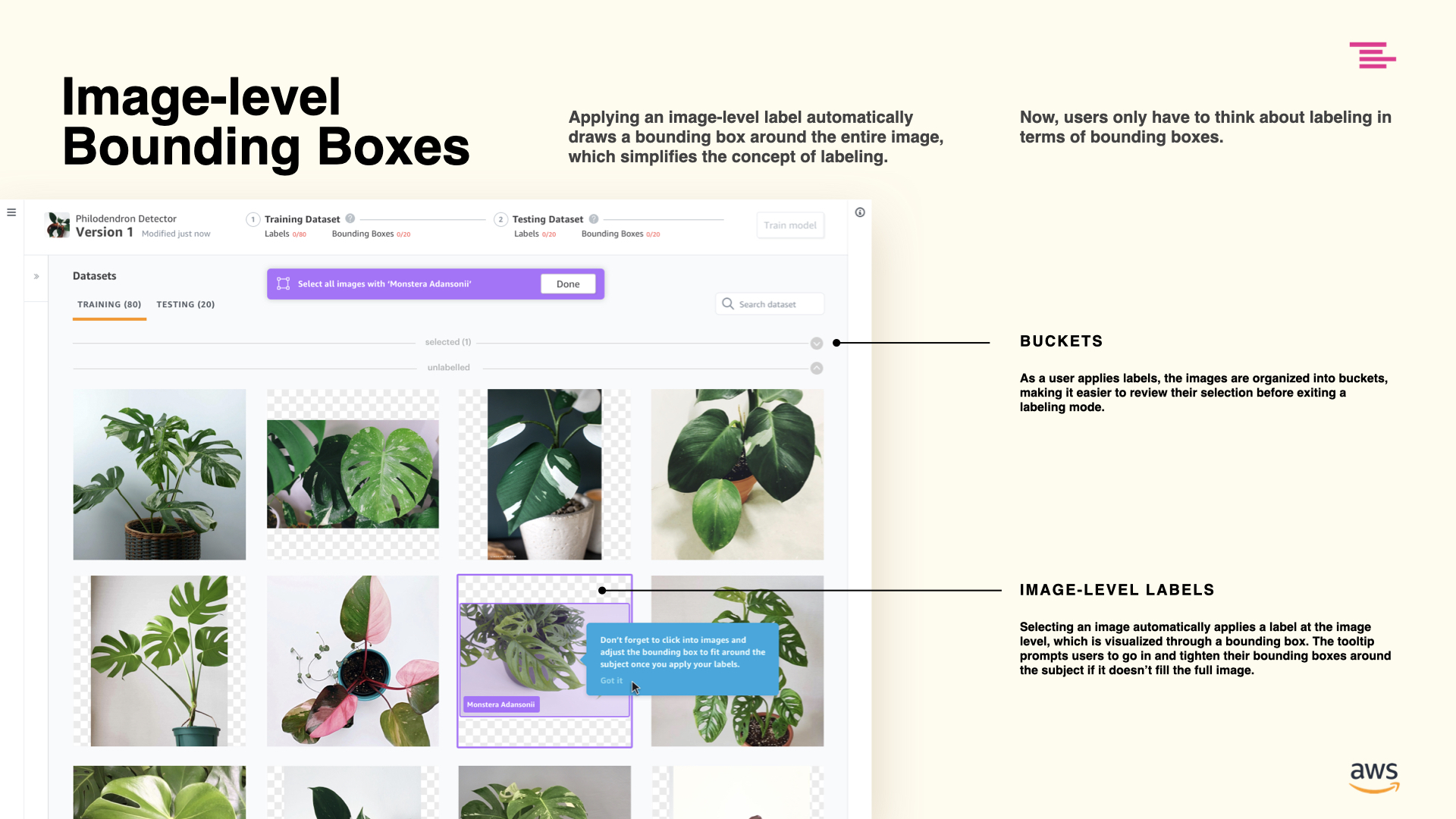
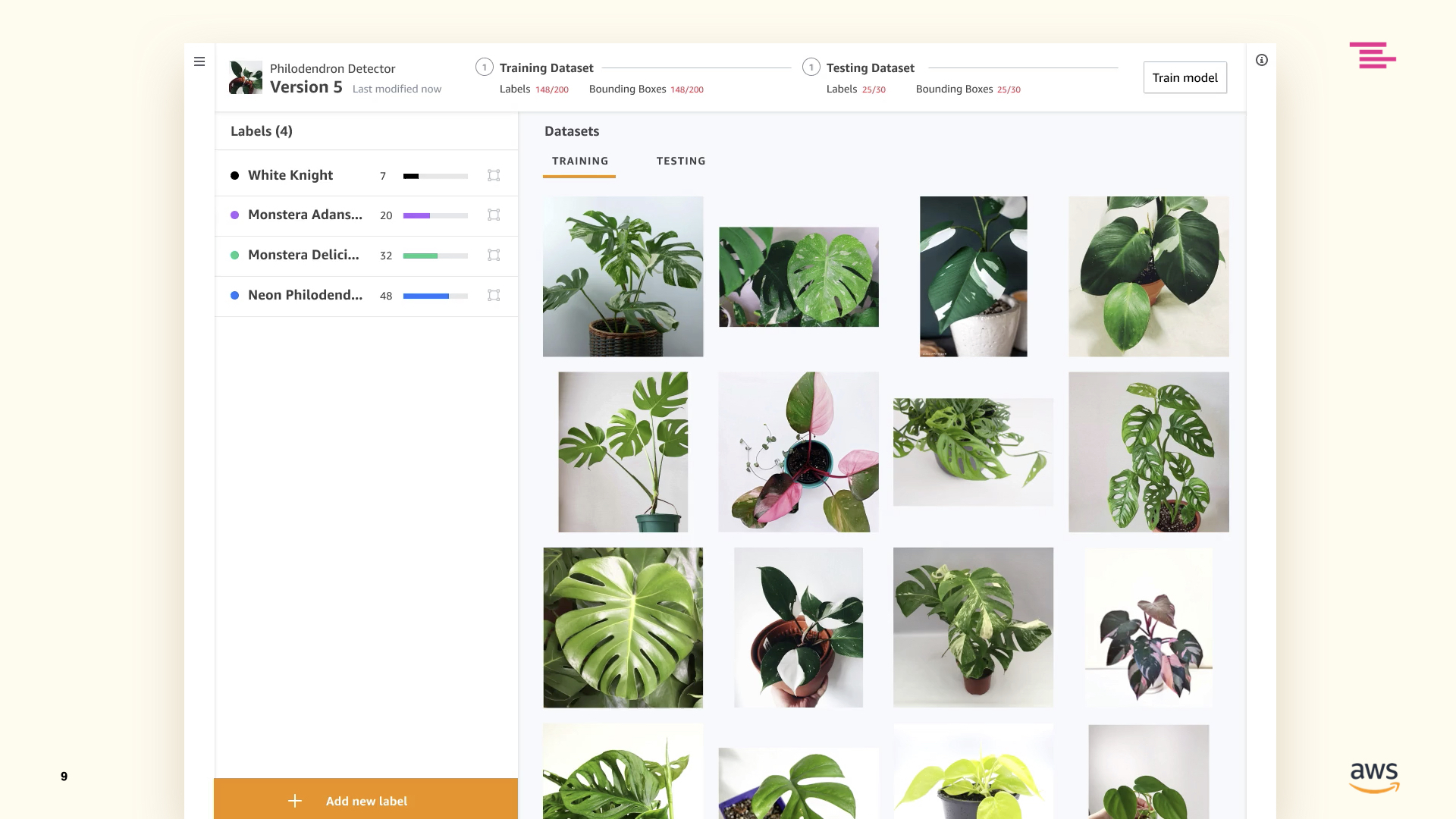
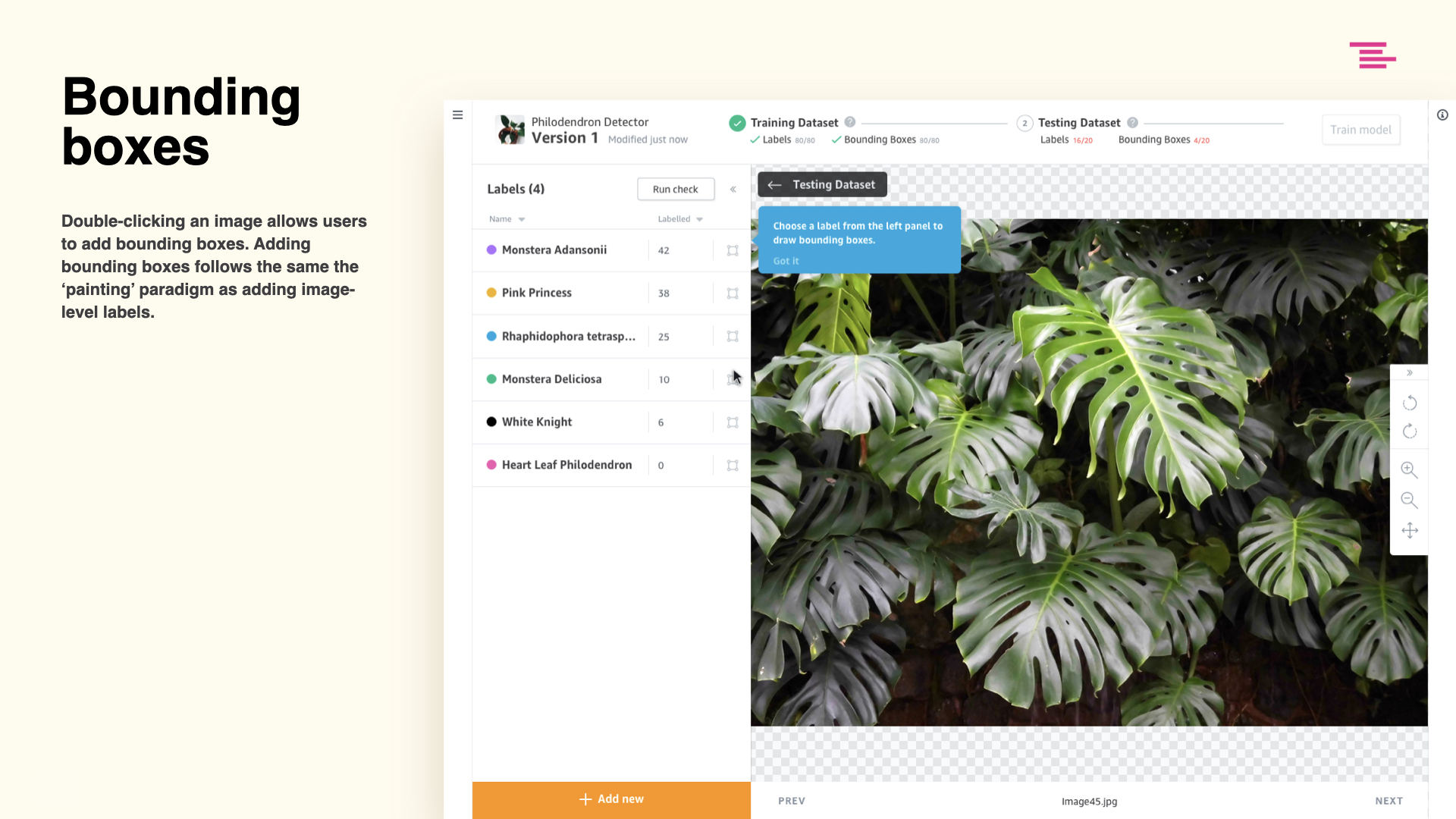
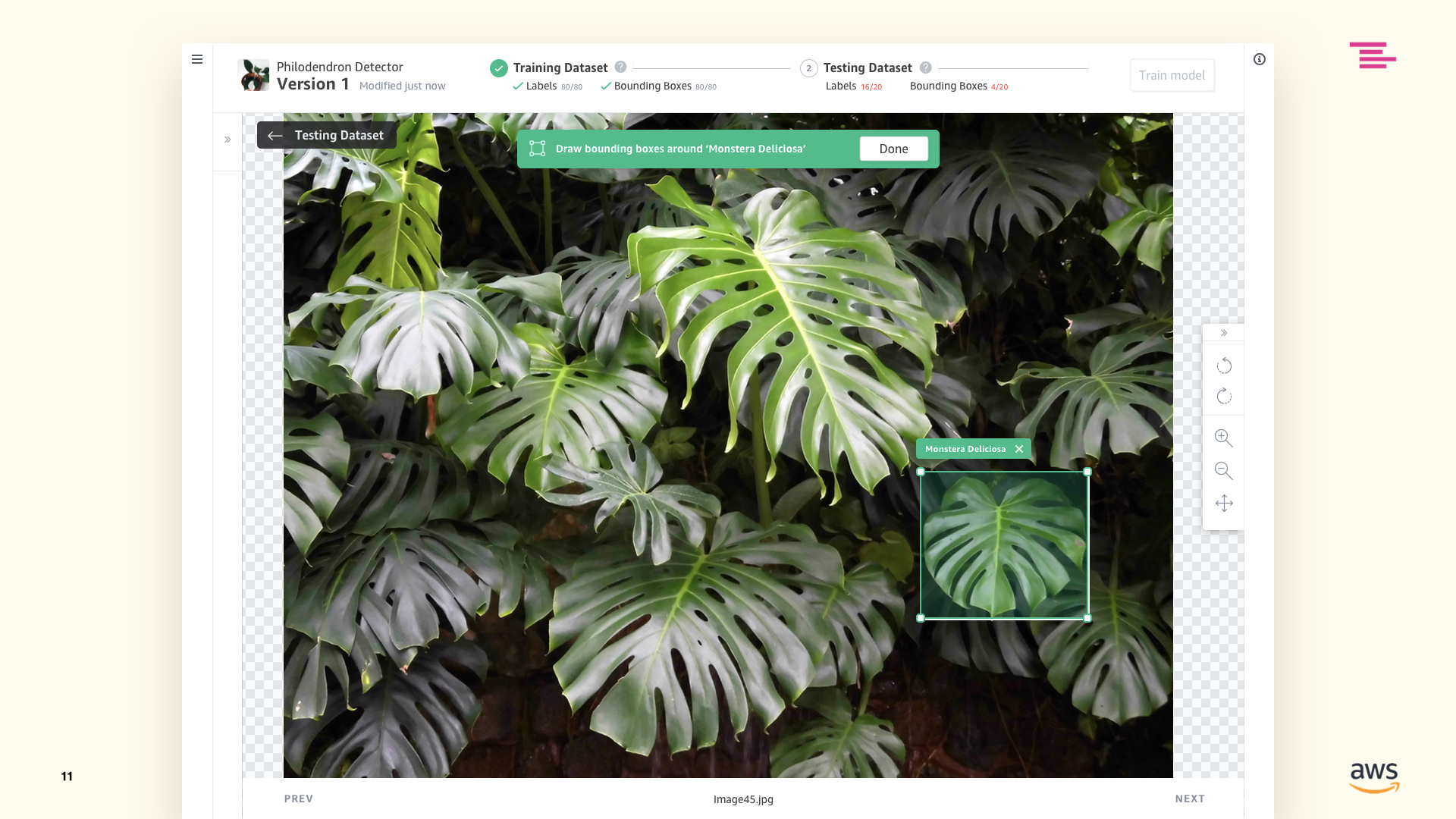
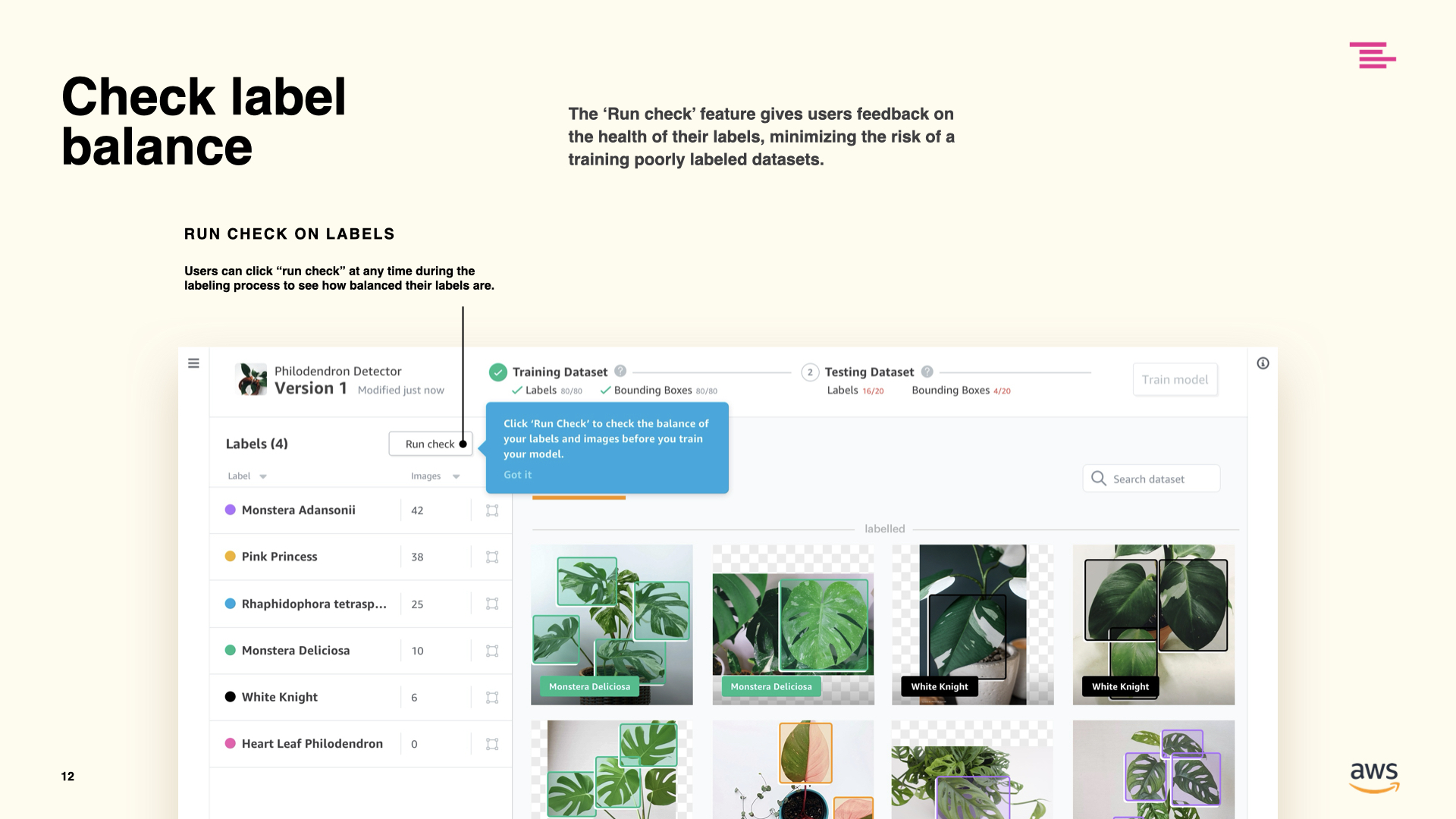
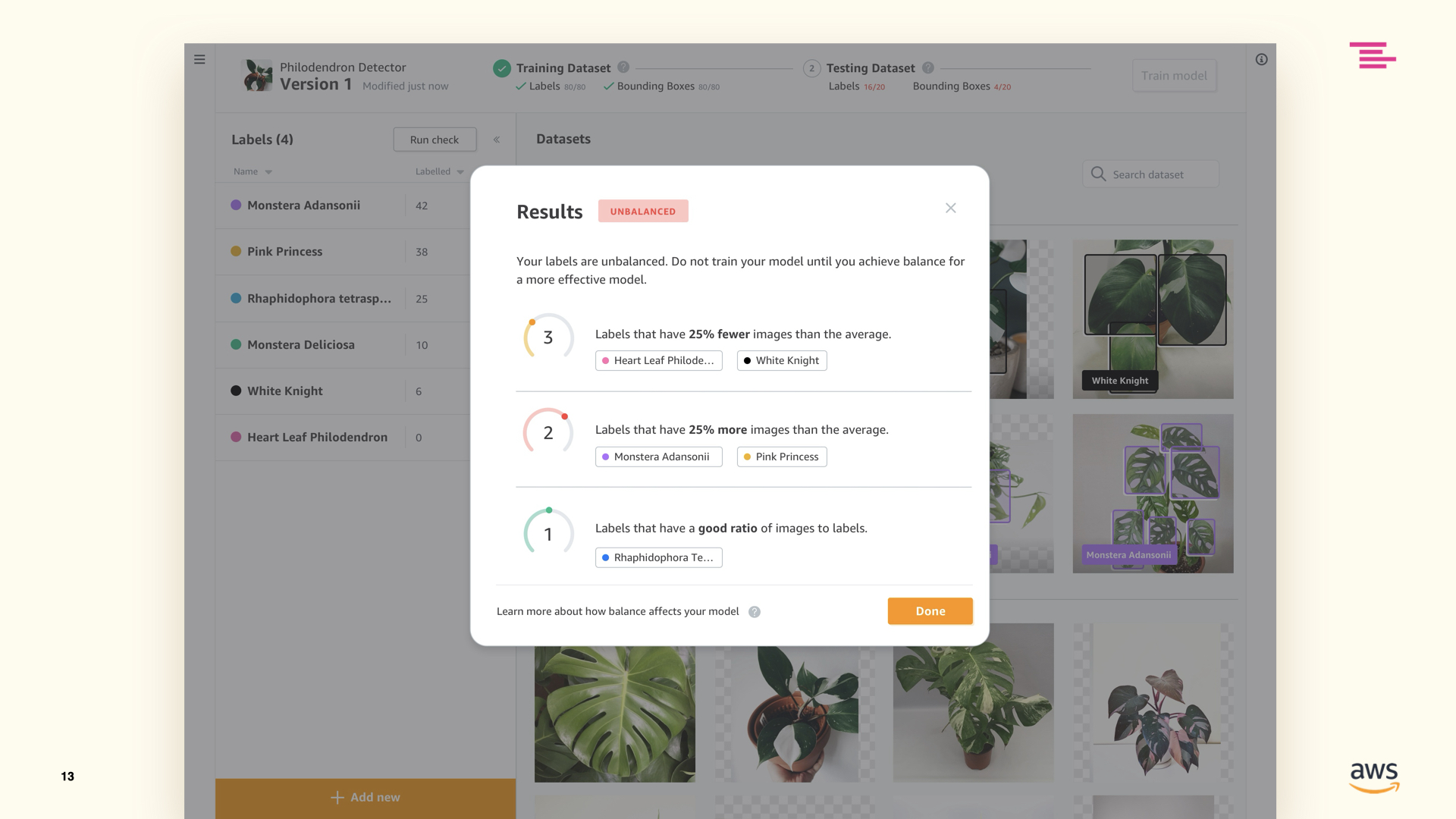
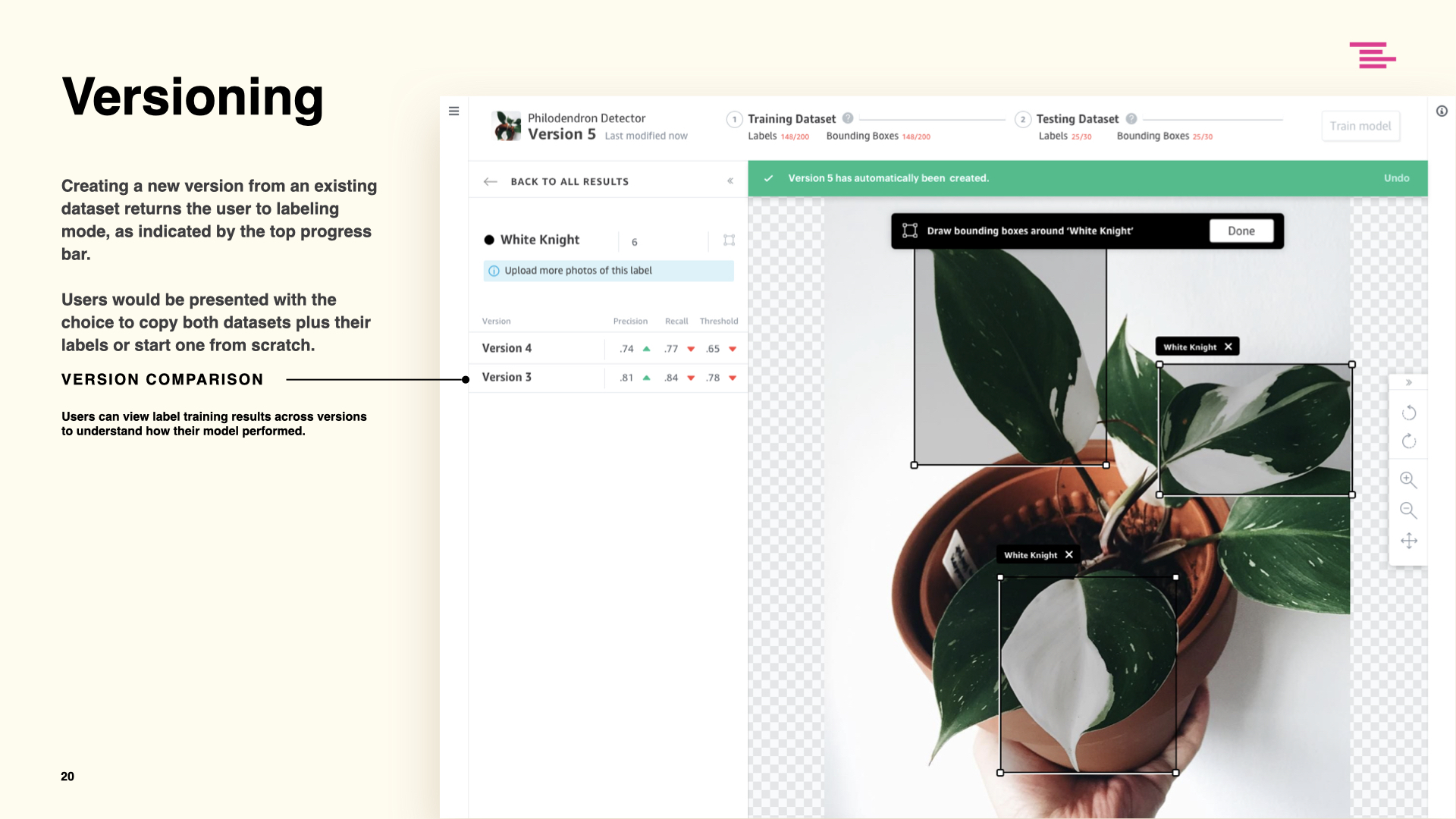
One of the central design challenges was creating the core experience for labeling training and test datasets. Designin the end-to-end workflow included uploading images, drawing bounding boxes, and assigning labels with ease. The interface had to be simple enough and educational for non-technical users, yet precise enough to support accuracy demands for data-training.

Since the effectiveness of the model relies heavily on the quality of these labels, this was a critical user experience to get.

We focused on:
  • Accessibility for beginners: Reduce cognitive load; remove ML jargon.
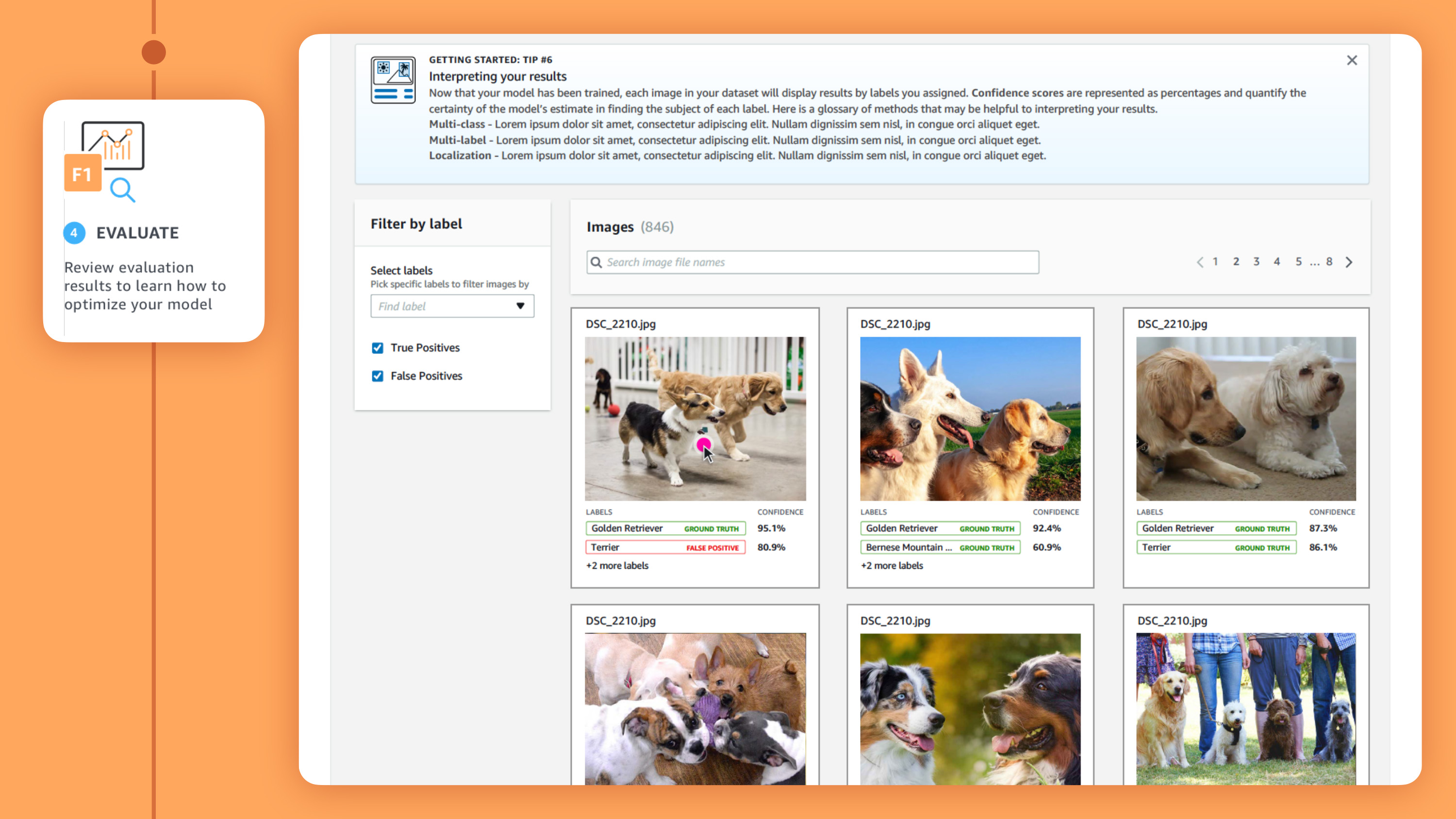
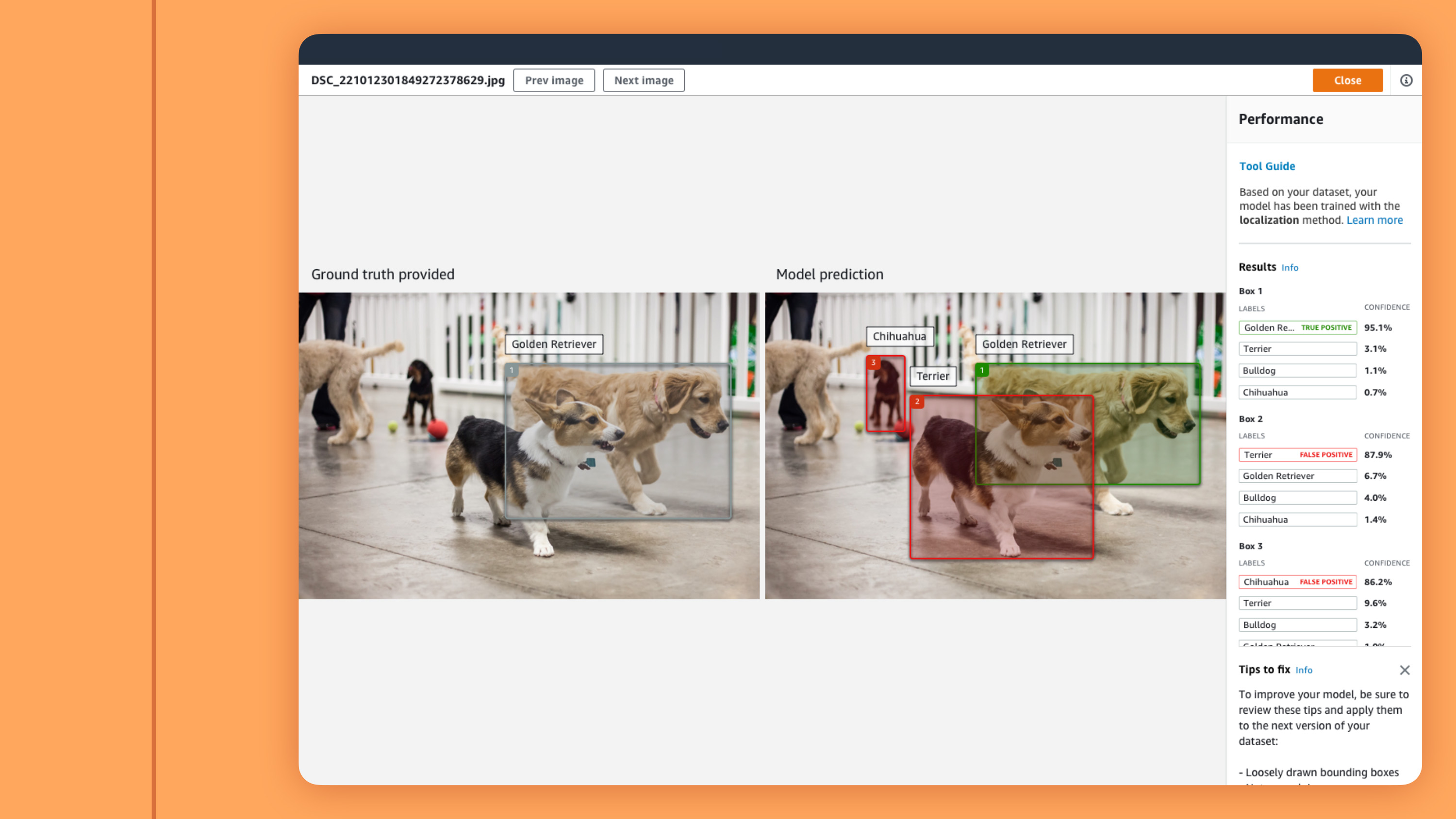
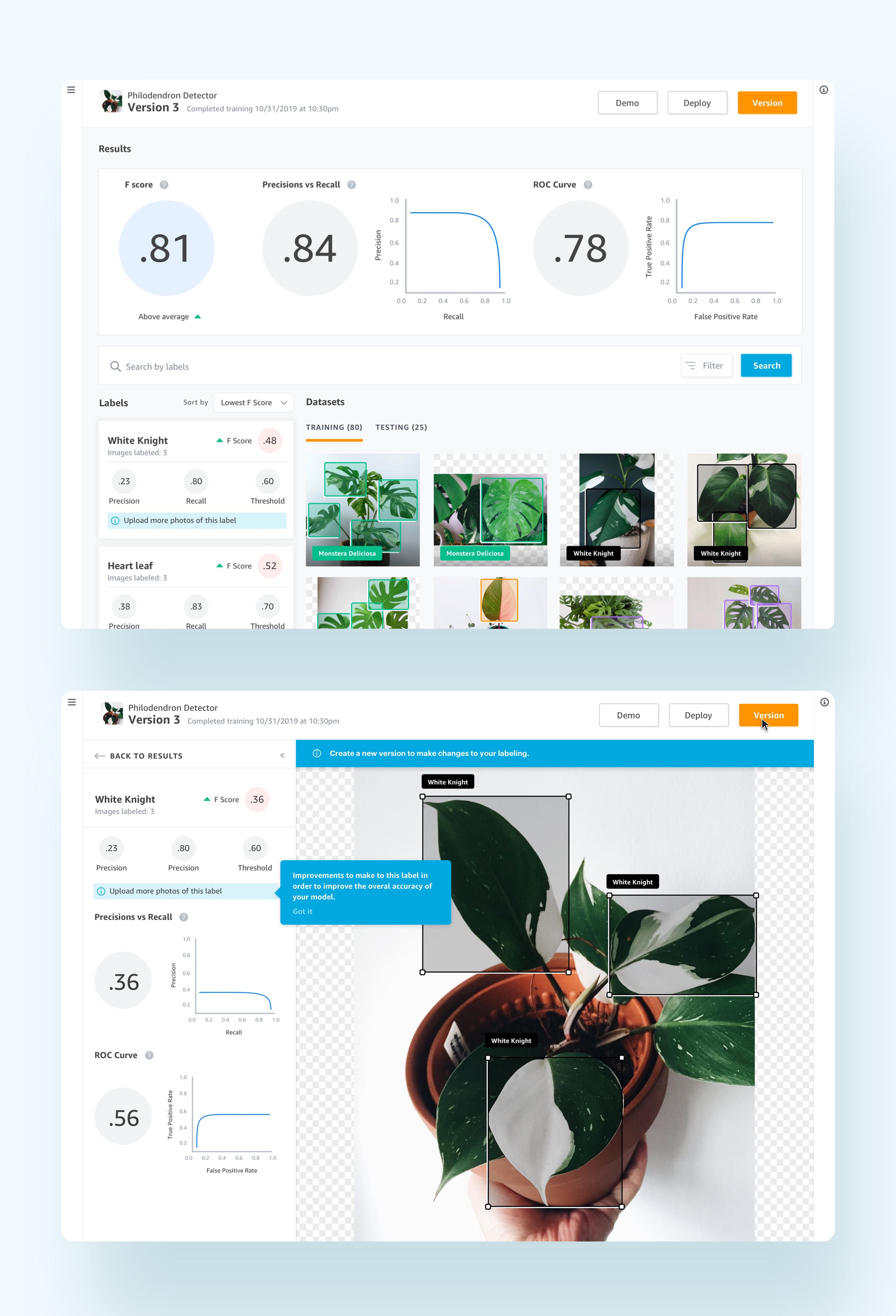
  • ML transparency: Reveal what the model sees and how performance is calculated.
  • Guided progression: Stepped, digestible workflows.
  • Efficiency for experts: Provide shortcuts, bulk actions, and more advanced views.
  • Striking the right balance between simplicity and precision was a complex design challenge but one that was key to making the product both usable and effective.

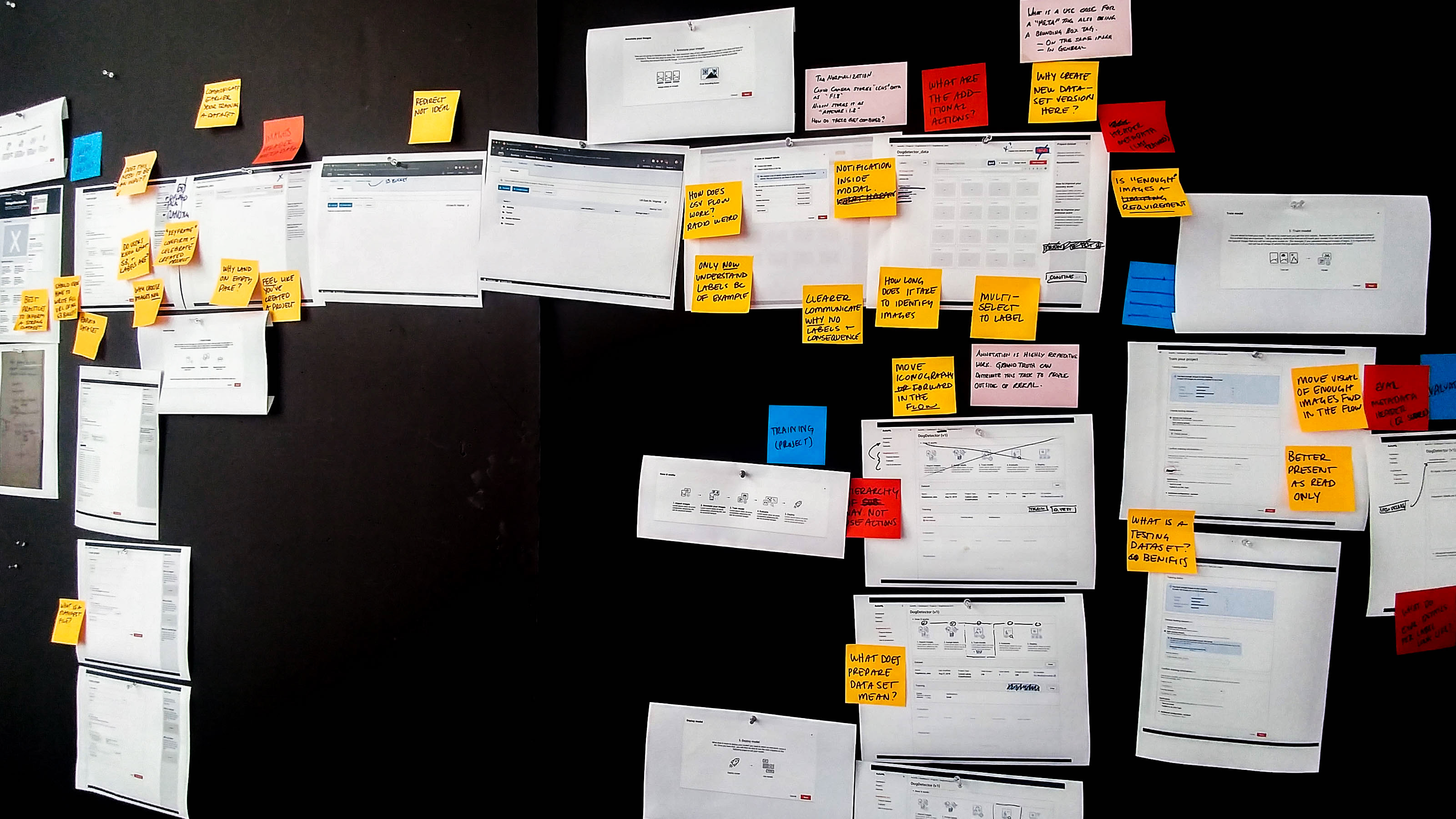
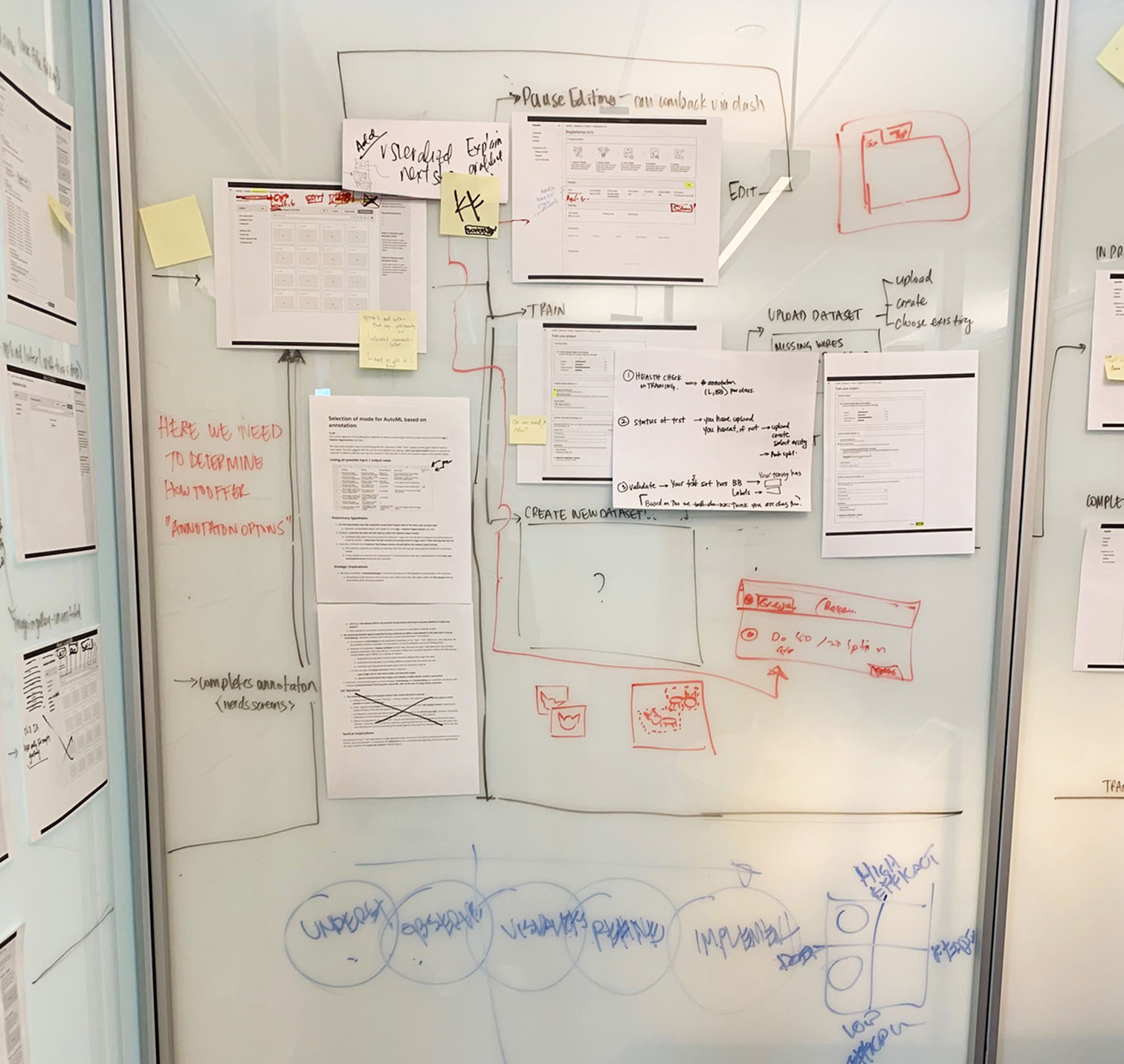
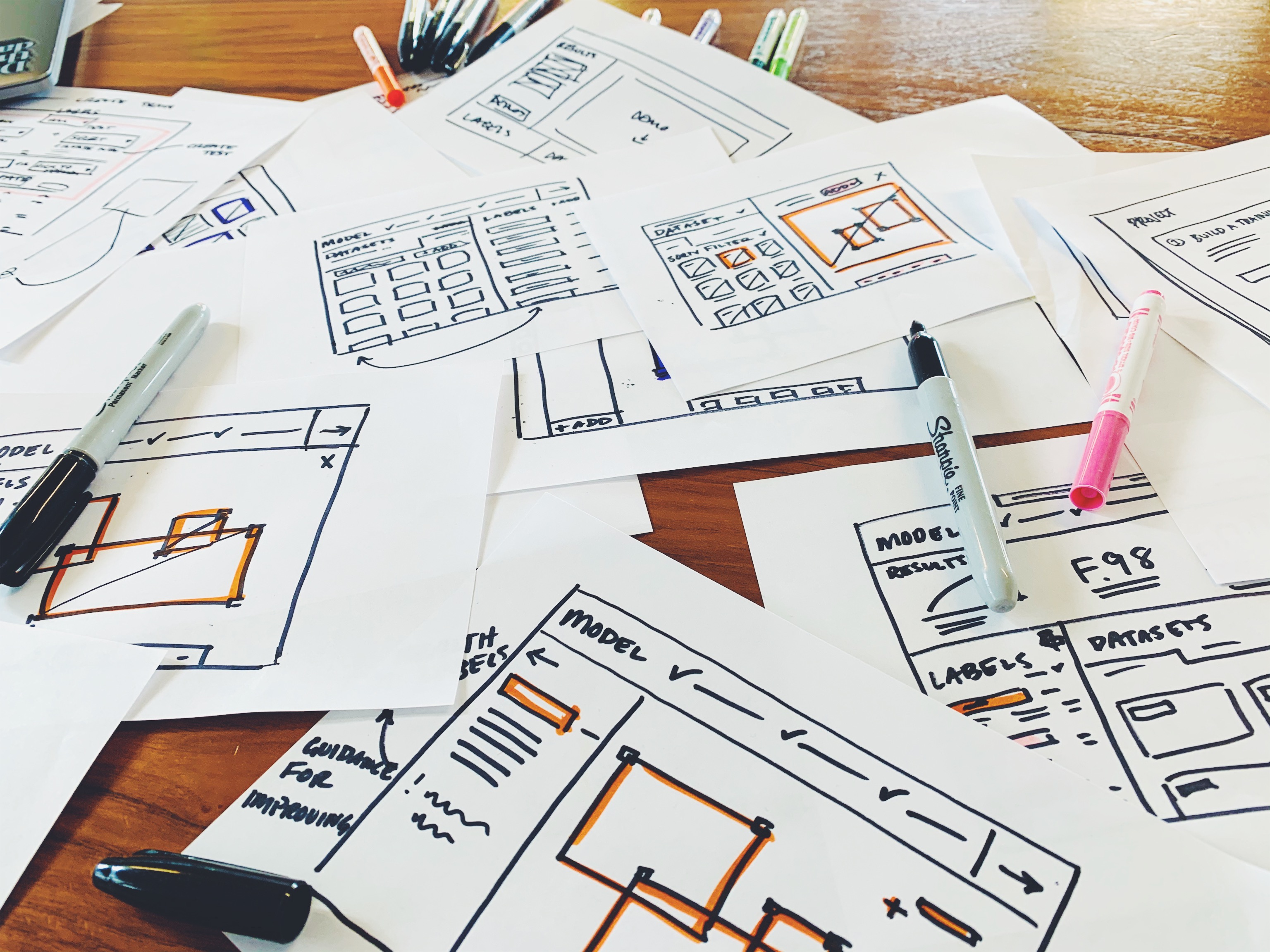
    The first steps of our project included PRD reviews, an audit of V0 wireframes, and deep-dive sessions with ML scientists.

    Brainstorming sessions with ML Scientists were focused on deconstructing core machine-learning concepts into a set of workflows that would be intuitive for users who lacked technical backgrounds.

    Design System Compliance


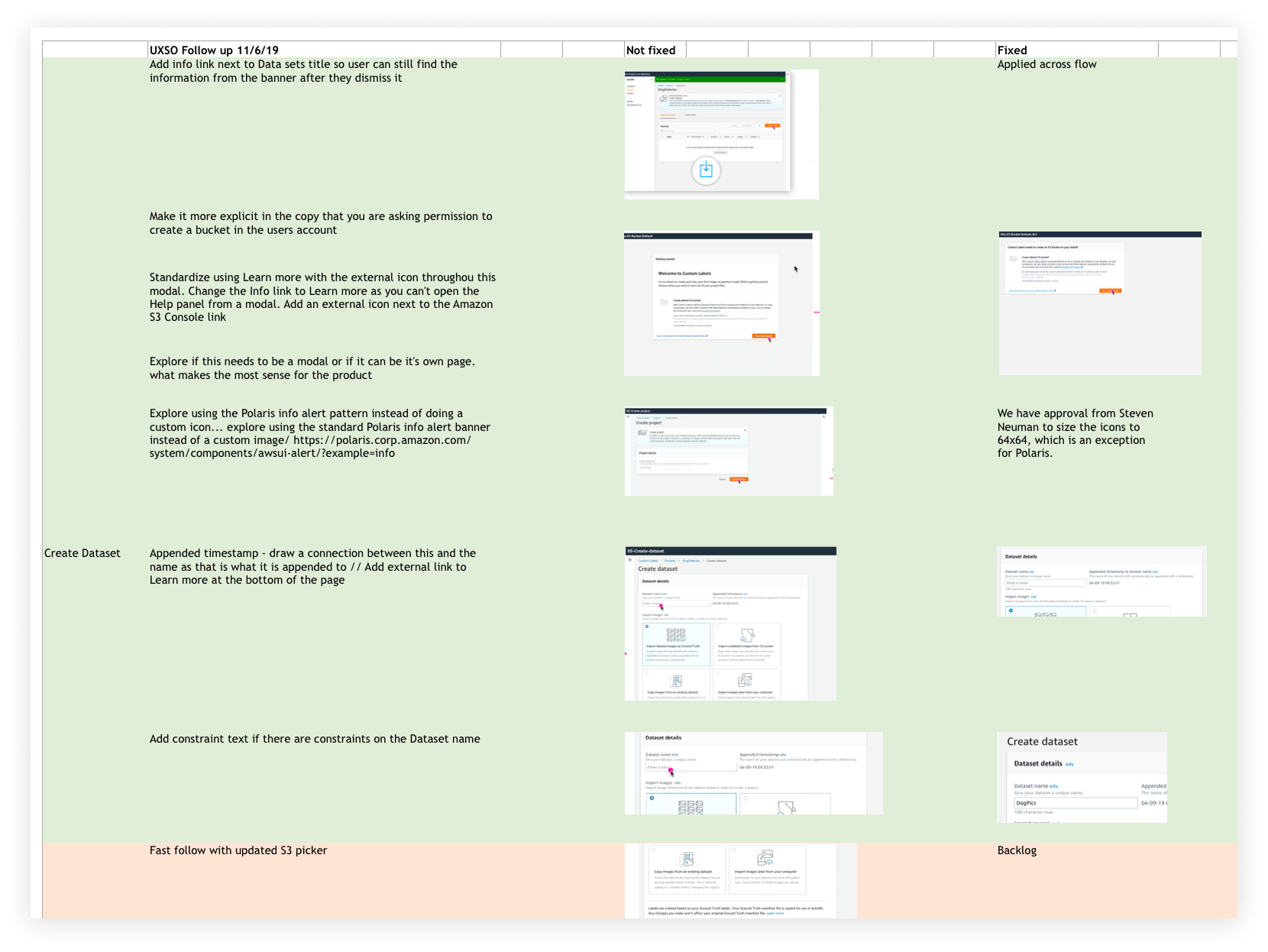
    UXSO Design System signoffs

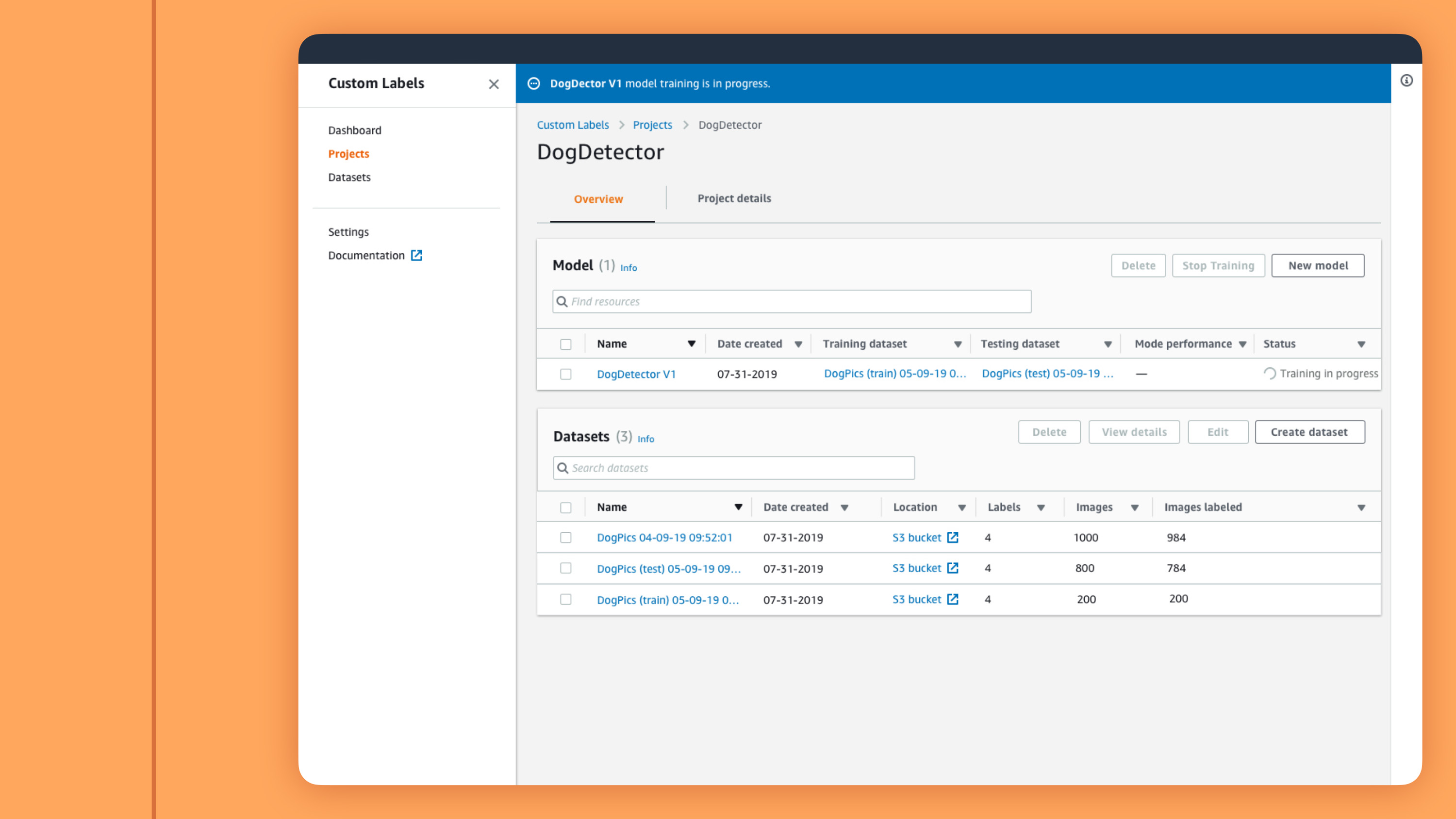
    Through meetings with the AWS Design System team, called "UXSO signoffs", our workflows needed to pass alignment with AWS design system, "Polaris." Within one week, we became fluent in Polaris and ready to advocate for our design decisions, plus justify any intentional deviations that surpassed existing principles.

    4 weeks
    16 iterations
    3 UXSO sign-offs
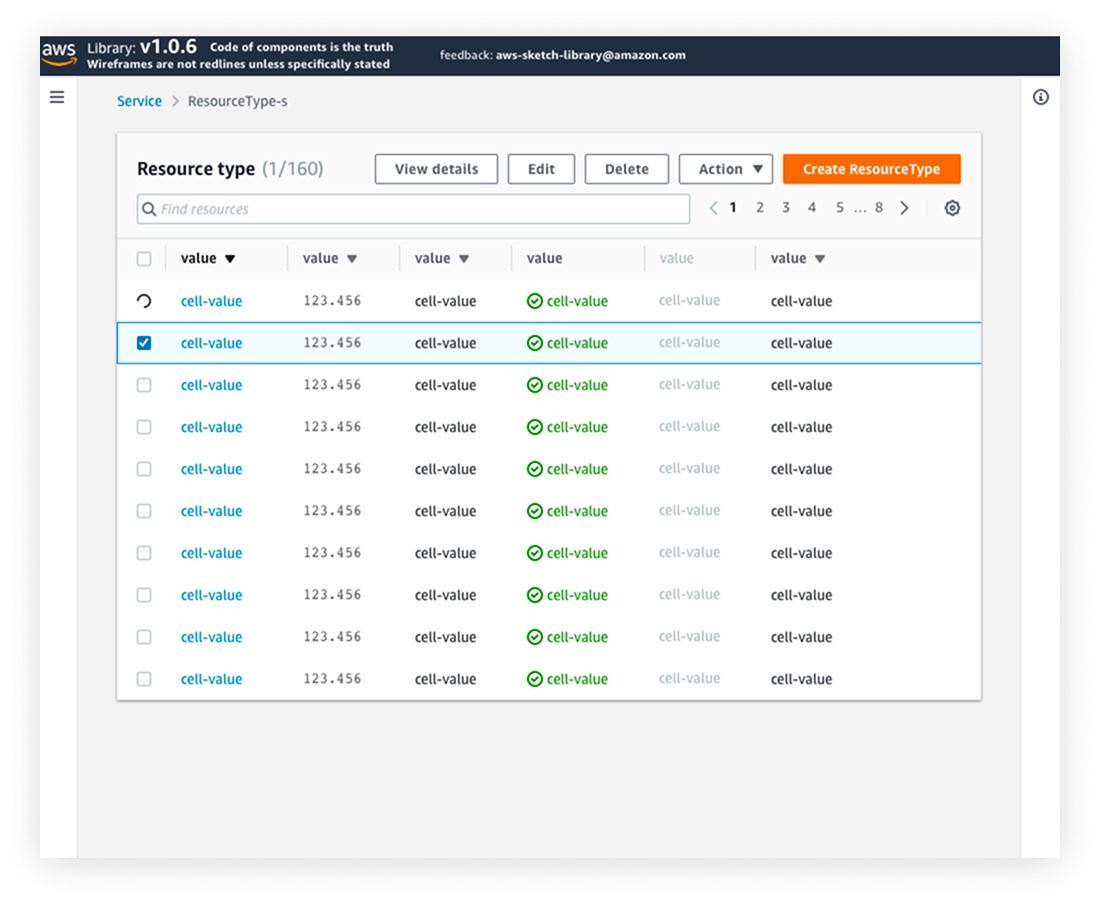
    Like any standardized system, Polaris came with both benefits and limitations. In cases where the existing components didn’t fully support the ideal user experience, we developed two parallel solutions: one that stayed within the bounds of Polaris to secure approval, and another that proposed a new or evolved component for future consideration.

    In just 4 weeks, the design moved through 16 iterations and 3 formal design sign-offs (UXSO) by Amazon's Polaris & executive design team with minimal changes.

    User validation


    Usability testing with AWS Enterprise Customers

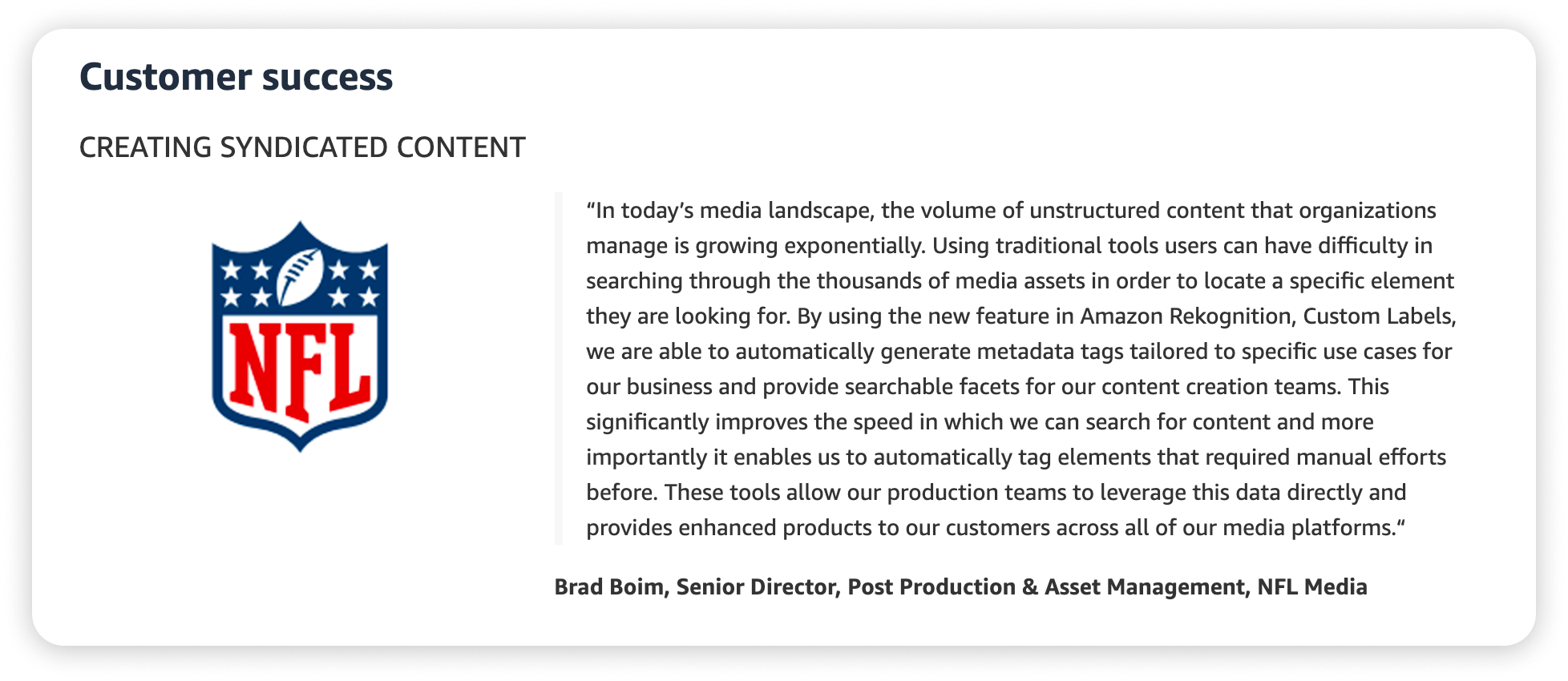
    Before any product launch, AWS requires that v1 workflows go through at least 2 rounds of usability testing with existing clients. We prepared the full testing protocol, targeting critical tasks and areas of the workflow that would reveal the approachability of the product, which was a key part of determing product-market fit. From one customer session with NFL, the user shared:

    "This product simplifies and breaks down the process of training a model step by step. I’ve used other Amazon tools for model training, and they had a steep learning curve. This product makes machine learning more approachable and less overwhelming. It’s something I could—and would—definitely use."

    -NFL customer
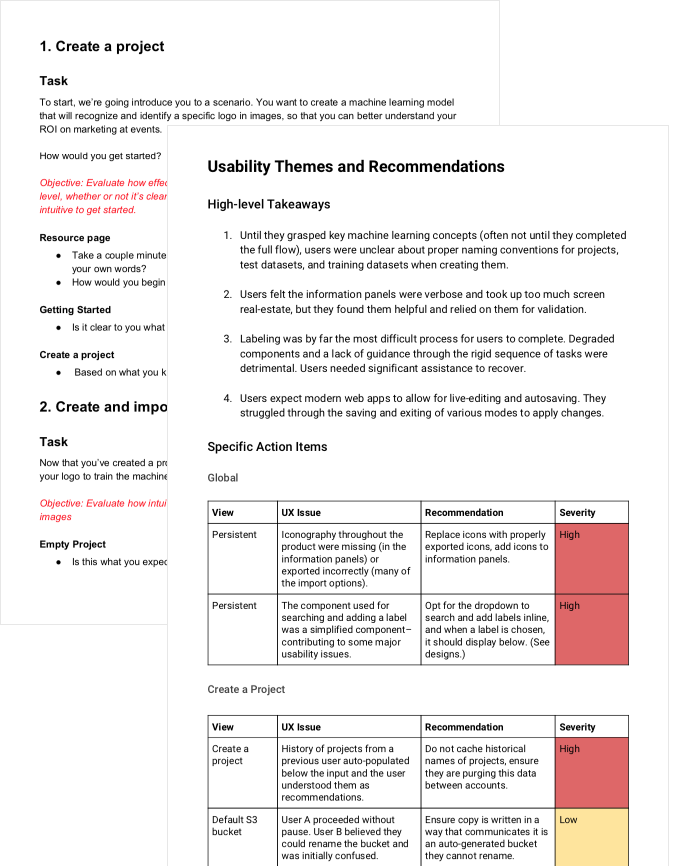
    From the customer sessions, we outlined takeaways and actionable improvements to ensure product-launch readiness. Daily feedback loops with the product team meant we had to rapidly iterate and implement changes in real time—ensuring design and development could move forward in parallel. Given the fast-paced nature of the project, my design partner and I became the central point of contact for communication while driving UX/UI deliverables.

    Outcomes

    Product Launch at AWS Re:Invent

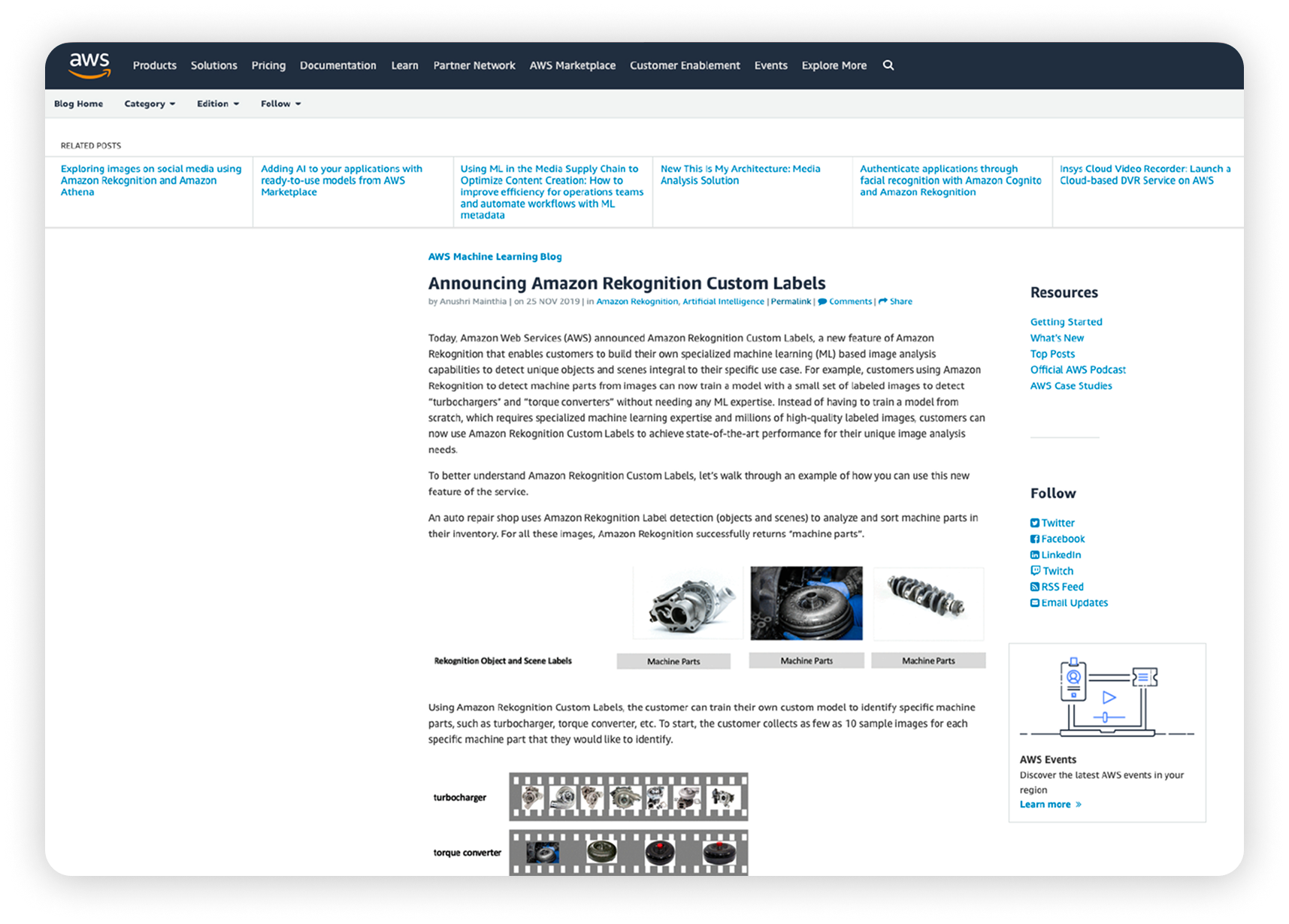
    In a matter of 6 weeks, we completed all the design processess needed to get Custom Labels launched. Through focused collaboration and leveraging our expertise in product design, we not only met this ambitious deadline but delivered a product that exceeded expectations. Our work earned the trust of internal design leads, leading to additional project referrals from Amazon. The product was well-received by customers, with positive feedback highlighting its ease of use and ability to simplify complex machine learning tasks.

    "Our team couldn’t have done it without the Teague team. Definitely easier to build on cleared earth versus wilderness."

    -Paul Kang, AWS Senior (L6) Frontend Developer
    Stretch goals


    An exercise in visioning: A future experience for AutoML

    In the time, AWS engineers prepared for Re:Invent launch, we took a step back to take a fresh look at the product with the user feedback we had gathered. With the constraints and pressure to launch behind us, we asked ourselves:

  • How might we approach this design differently without the 6-week time constraint?
  • How could we push Polaris to adopt evolving modern design standards?
  • How can we equip the team with a North Star to iterate towards in the future?
  • Over the course of two additional weeks, we explored an enhanced version of the product that addressed key user feedback while pushing the boundaries of Polaris to incorporate more modern, consumer-friendly interaction patterns. This work established a North Star vision—a strategic, forward-looking direction designed to guide future iterations. It laid the foundation for ongoing improvements, ensuring the product could evolve alongside user needs while remaining adaptable, scalable, and grounded in a clear design trajectory.

    For more work samples or a quick chat, get in touch.